
Illusory VQA: Benchmarking and Enhancing Multimodal Models on Visual Illusions
Paper • 2412.08169 • Published • 2
image imagewidth (px) 512 1.02k |
|---|
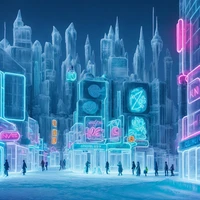
This repository contains the public test split of IllusionFashionMNIST, introduced in Illusory VQA: Benchmarking and Enhancing Multimodal Models on Visual Illusions. Each metadata row identifies a Fashion-MNIST target and can be paired across five image conditions: source-condition, illusion, filtered illusion, illusionless control, and filtered illusionless control.
The source-condition images originate from Fashion-MNIST and were resized to 512 × 512 pixels. Illusion images were generated from these inputs and English scene prompts with ControlNet. The filtered variants contain the preprocessing output evaluated in the paper.
| Property | Value |
|---|---|
| Hugging Face repository | VQA-Illusion/FashionMnist_test |
| Official split | Test |
| Task | Illusion classification / visual question answering |
| Annotated base examples | 1,152 |
| Image variants per example | 5 |
| Image format | JPEG |
| Metadata file | df_data.csv |
| Paper | arXiv:2412.08169 |
| Code | IllusoryVQA/IllusoryVQA |
| Path | Files | Description | Evaluation target |
|---|---|---|---|
ill_images/ |
1,152 | Generated images containing the target illusion. | The Fashion-MNIST class in label. |
illusion_images_filtered/ |
1,152 | Illusion images processed with the paper's filter pipeline. | The Fashion-MNIST class in label. |
illusionless_images/ |
1,152 | Matched scene images without an embedded illusion. | No illusion. |
illusionless_images_filtered/ |
1,152 | Filtered versions of the illusionless controls. | No illusion. |
raw_images/ |
1,152 | Source-condition Fashion-MNIST images used to guide illusion generation. | The Fashion-MNIST class in label. |
df_data.csv |
1 | Canonical metadata for the 1,152 base examples. | — |
unique_captions.csv |
1 | Pool of 1,027 English scene descriptions used by the generation process. | — |
raw.jpg |
1 | Standalone auxiliary image; it is not indexed by df_data.csv. |
— |
All five indexed directories use the same filename stem. For example, FashionMnist_1 corresponds to FashionMnist_1.jpg in every variant directory.
| Column | Type | Description |
|---|---|---|
image_name |
string | Image identifier and shared filename stem. |
Pprompt |
string | Positive scene prompt used during generation. |
Nprompt |
string | Negative generation prompt; currently low quality. |
illusion_strength |
float | Control strength used during illusion generation; currently 1.5. |
label |
integer-like string | Ground-truth Fashion-MNIST category ID, from 0 to 9. |
The CSV labels describe the target embedded in the illusion and shown in the source-condition image. For either illusionless directory, override the target with No illusion.
The following order matches Fashion-MNIST and the official experiment code.
| Numeric ID | Class label | Stored test value |
|---|---|---|
| 0 | T-shirt/top | 0 |
| 1 | Trouser | 1 |
| 2 | Pullover | 2 |
| 3 | Dress | 3 |
| 4 | Coat | 4 |
| 5 | Sandal | 5 |
| 6 | Shirt | 6 |
| 7 | Sneaker | 7 |
| 8 | Bag | 8 |
| 9 | Ankle boot | 9 |
| 10 | No illusion | Derived target for illusionless_images/ and illusionless_images_filtered/ |
pip install -U huggingface_hub pandas pillow
from huggingface_hub import snapshot_download

dataset_dir = snapshot_download(
    repo_id="VQA-Illusion/FashionMnist_test",
    repo_type="dataset",
)
print(dataset_dir)
Command-line alternative:
huggingface-cli download VQA-Illusion/FashionMnist_test \
  --repo-type dataset \
  --local-dir FashionMnist_test
from pathlib import Path
import pandas as pd
from huggingface_hub import snapshot_download

root = Path(snapshot_download(
    repo_id="VQA-Illusion/FashionMnist_test",
    repo_type="dataset",
))
df = pd.read_csv(root / "df_data.csv", dtype={"label": "int64"})

folders = {
    "illusion": "ill_images",
    "illusion_filtered": "illusion_images_filtered",
    "illusionless": "illusionless_images",
    "illusionless_filtered": "illusionless_images_filtered",
    "raw": "raw_images",
}

for condition, folder in folders.items():
    df[condition + "_path"] = df["image_name"].map(
        lambda name, folder=folder: root / folder / (name + ".jpg")
    )

id_to_label = {
    0: "T-shirt/top",
    1: "Trouser",
    2: "Pullover",
    3: "Dress",
    4: "Coat",
    5: "Sandal",
    6: "Shirt",
    7: "Sneaker",
    8: "Bag",
    9: "Ankle boot",
    10: "No illusion",
}

long_rows = []
for row in df.itertuples(index=False):
    for condition in folders:
        target_id = 10 if condition.startswith("illusionless") else int(row.label)
        long_rows.append({
            "image_name": row.image_name,
            "condition": condition,
            "image_path": getattr(row, condition + "_path"),
            "label_id": target_id,
            "label_text": id_to_label[target_id],
        })

evaluation_df = pd.DataFrame(long_rows)
assert evaluation_df["image_path"].map(Path.exists).all()
The paper's preprocessing pipeline applies a Gaussian blur, an averaging blur, a median blur, grayscale conversion, and sharpening. The exact OpenCV implementation and parameters are reported in Appendix K of the paper. The files in the two filtered directories are the released outputs of that pipeline.
This split supports:
Recommended classification metrics are accuracy, macro precision, macro recall, and macro F1. Keep all image conditions for an image_name in the same evaluation partition to avoid paired-data leakage.
The authors generated English scene descriptions with several language models and used ControlNet to combine the prompts with Fashion-MNIST source-condition images. Human reviewers validated dataset quality. The paper reports that the public datasets were screened with NSFW detectors and that flagged images were excluded.
The paper reports 1,267 IllusionFashionMNIST test samples, whereas the current public repository contains 1,152 rows in df_data.csv. This card documents the repository as currently hosted; use the current metadata file for reproducible indexing.
df_data.csv is the authoritative index; do not infer targets from top-level folder names.imagefolder classes. Those folder-derived labels are image conditions, not Fashion-MNIST categories.raw.jpg is not part of the indexed 1,152-example evaluation set.This dataset repository declares the MIT license. Users should also review and comply with any applicable terms associated with Fashion-MNIST and other upstream components.
@misc{rostamkhani2024illusoryvqa,
  title        = {Illusory VQA: Benchmarking and Enhancing Multimodal Models on Visual Illusions},
  author       = {Rostamkhani, Mohammadmostafa and Ansari, Baktash and Sabzevari, Hoorieh and Rahmani, Farzan and Eetemadi, Sauleh},
  year         = {2024},
  eprint       = {2412.08169},
  archivePrefix = {arXiv},
  primaryClass = {cs.CV},
  url          = {https://arxiv.org/abs/2412.08169}
}
Questions and reproducibility issues can be submitted through the official GitHub repository.