
Illusory VQA: Benchmarking and Enhancing Multimodal Models on Visual Illusions
Paper • 2412.08169 • Published • 2
image imagewidth (px) 512 1.02k | label class label 2
classes |
|---|---|
0ill_images | |
0ill_images | |
0ill_images | |
0ill_images | |
0ill_images | |
0ill_images | |
0ill_images | |
0ill_images | |
0ill_images | |
0ill_images | |
0ill_images | |
0ill_images | |
0ill_images | |
0ill_images | |
0ill_images | |
0ill_images | |
0ill_images | |
0ill_images | |
0ill_images | |
0ill_images | |
0ill_images | |
0ill_images | |
0ill_images | |
0ill_images | |
0ill_images | |
0ill_images | |
0ill_images | |
0ill_images | |
0ill_images | |
0ill_images | |
0ill_images | |
0ill_images | |
0ill_images | |
0ill_images | |
0ill_images | |
0ill_images | |
0ill_images | |
0ill_images | |
0ill_images | |
0ill_images | |
0ill_images | |
0ill_images | |
0ill_images | |
0ill_images | |
0ill_images | |
0ill_images | |
0ill_images | |
0ill_images | |
0ill_images | |
0ill_images | |
0ill_images | |
0ill_images | |
0ill_images | |
0ill_images | |
0ill_images | |
0ill_images | |
0ill_images | |
0ill_images | |
0ill_images | |
0ill_images | |
0ill_images | |
0ill_images | |
0ill_images | |
0ill_images | |
0ill_images | |
0ill_images | |
0ill_images | |
0ill_images | |
0ill_images | |
0ill_images | |
0ill_images | |
0ill_images | |
0ill_images | |
0ill_images | |
0ill_images | |
0ill_images | |
0ill_images | |
0ill_images | |
0ill_images | |
0ill_images | |
0ill_images | |
0ill_images | |
0ill_images | |
0ill_images | |
0ill_images | |
0ill_images | |
0ill_images | |
0ill_images | |
0ill_images | |
0ill_images | |
0ill_images | |
0ill_images | |
0ill_images | |
0ill_images | |
0ill_images | |
0ill_images | |
0ill_images | |
0ill_images | |
0ill_images | |
0ill_images |
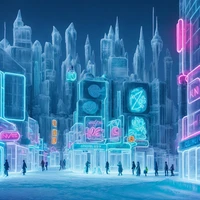
This repository contains the training split of IllusionFashionMNIST, one of the four datasets introduced in Illusory VQA: Benchmarking and Enhancing Multimodal Models on Visual Illusions. It is designed to train and evaluate models on the recognition of Fashion-MNIST categories embedded as visual illusions (pareidolia) in generated scenes.
The source-condition images are sampled from Fashion-MNIST and resized to 512 × 512 pixels. They are combined with English scene descriptions and transformed into illusory images using ControlNet. The split also includes a balanced No illusion class.
| Property | Value |
|---|---|
| Hugging Face repository | VQA-Illusion/FashionMnist_train |
| Official split | Train |
| Task | 11-way illusion classification / visual question answering |
| Annotated examples | 3,300 |
| Image format | JPEG |
| Metadata file | df_data.csv |
| Paper | arXiv:2412.08169 |
| Code | IllusoryVQA/IllusoryVQA |
| Path | Files | Description |
|---|---|---|
ill_images/ |
3,300 | Primary training images. The folder contains both illusion-bearing examples and the 300 examples assigned to the No illusion class. |
raw_images/ |
3,000 | Source-condition images used to generate the illusion-bearing examples. No raw counterpart is provided for the 300 No illusion rows. |
df_data.csv |
1 | Canonical metadata and target labels. |
README.md |
1 | Dataset card. |
The value in image_name is the filename stem. For example, FashionMnist_train_0 corresponds to ill_images/FashionMnist_train_0.jpg.
The CSV contains one row per primary training example.
| Column | Type | Description |
|---|---|---|
image_name |
string | Image identifier and filename stem. |
Pprompt |
string | Positive scene prompt used during illusion-image generation. |
Nprompt |
string | Negative generation prompt. It is empty for No illusion rows. |
illusion_strength |
float or empty | Control strength used for illusion generation. It is 1.5 for illusion-bearing rows and empty for No illusion rows. |
label |
string | Ground-truth Fashion-MNIST class ID (0–9) or No Illusion. |
Read the CSV with string-preserving options because label contains both numbers and text:
import pandas as pd

metadata = pd.read_csv(
    "df_data.csv",
    dtype={"label": "string"},
    keep_default_na=False,
)
metadata["label_normalized"] = metadata["label"].str.strip().str.casefold()
The following order matches Fashion-MNIST and the class lists used in the official experiment code.
| Numeric ID | Class label | Value stored in df_data.csv |
|---|---|---|
| 0 | T-shirt/top | 0 |
| 1 | Trouser | 1 |
| 2 | Pullover | 2 |
| 3 | Dress | 3 |
| 4 | Coat | 4 |
| 5 | Sandal | 5 |
| 6 | Shirt | 6 |
| 7 | Sneaker | 7 |
| 8 | Bag | 8 |
| 9 | Ankle boot | 9 |
| 10 | No illusion | No Illusion |
Use ID 10 when converting the textual No illusion target to a fully numeric label space.
Install the required packages:
pip install -U huggingface_hub pandas pillow
Download the complete repository:
from huggingface_hub import snapshot_download

dataset_dir = snapshot_download(
    repo_id="VQA-Illusion/FashionMnist_train",
    repo_type="dataset",
)
print(dataset_dir)
Command-line alternative:
huggingface-cli download VQA-Illusion/FashionMnist_train \
  --repo-type dataset \
  --local-dir FashionMnist_train
Use df_data.csv as the source of truth rather than treating the top-level image directories as semantic classes.
from pathlib import Path
import pandas as pd
from huggingface_hub import snapshot_download

root = Path(snapshot_download(
    repo_id="VQA-Illusion/FashionMnist_train",
    repo_type="dataset",
))

df = pd.read_csv(
    root / "df_data.csv",
    dtype={"label": "string"},
    keep_default_na=False,
)

df["illusion_path"] = df["image_name"].map(
    lambda name: root / "ill_images" / (name + ".jpg")
)
df["raw_path"] = df["image_name"].map(
    lambda name: root / "raw_images" / (name + ".jpg")
)
df["raw_path"] = df["raw_path"].map(
    lambda path: path if path.exists() else None
)

id_to_label = {
    0: "T-shirt/top",
    1: "Trouser",
    2: "Pullover",
    3: "Dress",
    4: "Coat",
    5: "Sandal",
    6: "Shirt",
    7: "Sneaker",
    8: "Bag",
    9: "Ankle boot",
    10: "No illusion",
}

def to_label_id(value):
    value = str(value).strip()
    return 10 if value.casefold() == "no illusion" else int(value)

df["label_id"] = df["label"].map(to_label_id)
assert df["illusion_path"].map(Path.exists).all()
Suitable uses include:
For VQA evaluation, ask whether the image contains an illusion and restrict the answer space to the ten Fashion-MNIST classes plus No illusion. The exact prompt templates used in the paper are available in Appendix G and in the official code repository.
The authors generated diverse English scene descriptions with several language models, combined those descriptions with source-condition images, and produced the illusion images with ControlNet. Human reviewers validated dataset quality. The paper also reports content-safety screening and the removal of images flagged by NSFW detectors from the public release.
df_data.csv is the authoritative index. Do not infer the semantic target from the top-level directory name.imagefolder classes. Those folder-derived labels describe image variants, not Fashion-MNIST targets.raw_images/.This dataset repository declares the MIT license. Users should also review and comply with any applicable terms associated with Fashion-MNIST and other upstream components.
If you use this dataset, please cite:
@misc{rostamkhani2024illusoryvqa,
  title        = {Illusory VQA: Benchmarking and Enhancing Multimodal Models on Visual Illusions},
  author       = {Rostamkhani, Mohammadmostafa and Ansari, Baktash and Sabzevari, Hoorieh and Rahmani, Farzan and Eetemadi, Sauleh},
  year         = {2024},
  eprint       = {2412.08169},
  archivePrefix = {arXiv},
  primaryClass = {cs.CV},
  url          = {https://arxiv.org/abs/2412.08169}
}
Questions and reproducibility issues can be submitted through the official GitHub repository.