
Datasets:

prompt stringlengths 9 34.7k ⌀ | completion stringlengths 1 46.1k | enhanced_prompt stringlengths 74 191k ⌀ | enhanced_completion stringlengths 454 178k | original_context stringclasses 1
value | source stringclasses 1
value |
|---|---|---|---|---|---|
Nigeria's CO2 emissions, from Our World in Data: 2000, total 96.831 million tonnes, per-capita 0.766 tonnes. 2024, total 135.824 million tonnes, per-capita 0.584 tonnes. Calculate the percentage change in each and interpret the divergence. | Total emissions rose 40.3% (96.831 to 135.824 million tonnes) while per-capita emissions fell 23.8% (0.766 to 0.584 tonnes) over the same 24-year period. This divergence means population growth outpaced emissions growth, Nigeria's population roughly doubled over this period while its total emissions grew by less than h... | null | Here are the calculations for the percentage changes in Nigeria's CO₂ emissions between 2000 and 2024, followed by an interpretation of the divergence between total and per-capita figures.
### 1. Percentage Change Calculations
The formula for percentage change is:
$$ \text{Percentage Change} = \left( \frac{\text{New ... | Our World in Data, owid/co2-data (GitHub), downloaded directly | Our World in Data, owid/co2-data (GitHub), downloaded directly |
Trade-embodied CO2, 2022, from Our World in Data (positive means net importer of embodied carbon, negative means net exporter): Nigeria 8.157 million tonnes, South Africa -110.459 million tonnes. Interpret what this means for each country's consumption-based emissions. | Nigeria is a net importer of embodied carbon (8.157 million tonnes positive), meaning its consumption-based emissions (what Nigerians actually use, including imported goods) exceed its production-based emissions (what's physically emitted within Nigeria's borders). South Africa shows the opposite pattern, a large net e... | null | Based on the data provided from Our World in Data for 2022, here is the interpretation of what these trade-embodied CO₂ figures mean for Nigeria and South Africa regarding their **consumption-based emissions**.
### The Core Concept
To understand these figures, it is essential to distinguish between two accounting meth... | Our World in Data, owid/co2-data (GitHub), downloaded directly | Our World in Data, owid/co2-data (GitHub), downloaded directly |
Carbon intensity of GDP, 2022, from Our World in Data (kg CO2 per dollar of GDP): Nigeria 0.116, South Africa 0.593, World average 0.288. Interpret Nigeria's position given its status as a major oil-producing economy. | Nigeria's carbon intensity (0.116 kg CO2/$) is lower than both South Africa's (0.593, 5.1x higher) and the World average (0.288, 2.5x higher), despite Nigeria's economy being closely associated with oil production. This is a genuinely counterintuitive finding: being a major oil producer does not automatically mean a ca... | null | Based on the 2022 Our World in Data figures, Nigeria's carbon intensity of GDP (0.116 kg CO₂/$) presents a striking paradox: it is roughly 60% lower than the world average (0.288) and over five times lower than its regional peer, South Africa (0.593), despite Nigeria being Africa's largest oil producer. Interpreting th... | Our World in Data, owid/co2-data (GitHub), downloaded directly | Our World in Data, owid/co2-data (GitHub), downloaded directly |
2022 comparison, from Our World in Data: Nigeria per-capita CO2 0.589 tonnes, South Africa per-capita CO2 6.874 tonnes (of which 357.02 million tonnes, or 83.3%, comes from coal). Calculate the ratio and interpret the driver. | South Africa's per-capita emissions are 11.7 times higher than Nigeria's (6.874 vs 0.589 tonnes), and coal alone accounts for 83.3% of South Africa's total emissions, the dominant driver of the gap. This is not primarily a population or development-level difference, both are major African economies, it reflects a funda... | null | Based on the 2022 data from *Our World in Data* that you provided, here is the calculation of the ratio and an interpretation of the underlying drivers.
### 1. Calculation of the Ratio
To find the ratio of South Africa's per-capita CO₂ emissions to Nigeria's, we divide South Africa's figure by Nigeria's figure:
$$ \... | Our World in Data, owid/co2-data (GitHub), downloaded directly | Our World in Data, owid/co2-data (GitHub), downloaded directly |
Nigeria's emissions by fuel source, from Our World in Data: 2000, oil 31.54 million tonnes, gas 13.179 million tonnes. 2024, oil 68.935 million tonnes, gas 40.734 million tonnes. Calculate the growth rate of each and interpret which fuel is driving Nigeria's emissions trajectory. | Oil-related emissions grew 118.6% over the period (31.54 to 68.935 million tonnes), while gas-related emissions grew 209.1% (13.179 to 40.734 million tonnes), meaning gas emissions grew roughly 1.8 times faster than oil emissions in relative terms, even though oil remains the larger absolute source. This is consistent ... | null | To determine which fuel source is driving Nigeria's emissions trajectory, we first need to calculate the Compound Annual Growth Rate (CAGR) for both oil and gas over the 24-year period from 2000 to 2024.
The formula for CAGR is:
$$CAGR = \left( \frac{\text{Ending Value}}{\text{Beginning Value}} \right)^{\frac{1}{n}} -... | Our World in Data, owid/co2-data (GitHub), downloaded directly | Our World in Data, owid/co2-data (GitHub), downloaded directly |
A non-venomous snake species — the Trachylepis maculilabris (Trachylepis maculilabris) — was recorded in Mombasa, Kenya, Kenya's principal coastal city where mangrove ecosystem destruction and coastal forest clearance is linked to increasing human-reptile encounter frequency. The observation was documented at geographi... | Urban Snake Displacement Risk Assessment — Mombasa, Kenya
USDRI Score: 28.0/100 (Moderate Risk)
The sighting of the Trachylepis maculilabris (Trachylepis maculilabris) at this location in Mombasa has been assessed using the Urban Snake Displacement Risk Index (USDRI), a reproducible composite framework that quantifie... | Provide your response to the following prompt:
<prompt>
# Task: Urban Snake Displacement Risk Assessment
**Subject Species**: *Trachylepis maculilabris* (Non-venomous)
**Location**: Mombasa, Kenya (Coordinates: -4.6483° N, 39.3866° E)
**Observation Date**: June 23, 2025
**Data Source**: GBIF Occurrence #5216969440
*... | # Urban Snake Displacement Risk Assessment (USDRI)
**Subject Species:** *Trachylepis maculilabris* (Scincidae)
**Location:** Mombasa, Kenya (-4.6483° N, 39.3866° E)
**Observation Date:** June 23, 2025
**Data Source:** GBIF Occurrence #5216969440
## 1. Score Explanation & Component Interpretation
**Composite Score Ana... | null | null |
null | Grand Canyon | Provide your response to the following prompt:
<prompt>
Provide one specific example of natural erosion caused by water.
</prompt>
Adhere to the following constraints in your response unless it contradicts a constraint that is already given in the prompt above:
# Constraints
The question you must answer is from a sc... | A definitive example of natural water erosion is the formation of the Grand Canyon by the Colorado River. Over millions of years, the river's flowing water has mechanically abraded the underlying rock layers through a process called hydraulic action and abrasion. As the river carries sediment such as sand, gravel, and ... | null | null |
A non-venomous snake species — the East African Garter Snake (Elapsoidea loveridgei) — was recorded in Nairobi, Kenya, a major East African capital bordered by Nairobi National Park, where urban expansion is actively encroaching on critical wildlife corridors and savanna habitats. The observation was documented at geog... | Urban Snake Displacement Risk Assessment — Nairobi, Kenya
USDRI Score: 41.9/100 (Moderate Risk)
The sighting of the East African Garter Snake (Elapsoidea loveridgei) at this location in Nairobi has been assessed using the Urban Snake Displacement Risk Index (USDRI), a reproducible composite framework that quantifies ... | Provide your response to the following prompt:
<prompt>
Act as an ecological risk analyst. Using the provided data for an East African Garter Snake (Elapsoidea loveridgei) sighting in Nairobi, Kenya, generate a comprehensive Displacement Risk Assessment based on the Urban Snake Displacement Risk Index (USDRI).
**Inp... | # Urban Snake Displacement Risk Assessment (USDRI)
**Subject:** *Elapsoidea loveridgei* (East African Garter Snake)
**Location:** Nairobi, Kenya (Lat: -1.1816, Lon: 36.9475)
**Assessment Date:** 2023-02-08
**Risk Classification:** Moderate (Score: 41.9)
## 1. Risk Score Interpretation
The composite USDRI score o... | null | null |
null | <think>
Okay, this is a highly technical question about topological condensed matter physics, specifically the ν=5/2 fractional quantum Hall state. The user is asking about the role of particle-hole symmetry breaking in stabilizing non-Abelian anyons (like the Majorana or Parafermion modes proposed for the Pfaffian sta... | Provide your response to the following prompt:
<prompt>
Provide a comprehensive technical analysis addressing the following two components regarding the ν=5/2 fractional quantum Hall state:
1. **Role of Symmetry Breaking**: Explain the specific role of particle-hole symmetry breaking in the formation of non-Abelian a... | ### Technical Analysis of the $\nu=5/2$ Fractional Quantum Hall State
The $\nu=5/2$ fractional quantum Hall (FQH) state represents a unique topological phase residing in the second Landau level (SLL). Unlike the primary Laughlin sequences in the lowest Landau level, the $\nu=5/2$ state is widely theorized to host non-... | null | null |
In Quantum Mechanics we mostly use linear operators which often represent a physical observable,
In relativity we mostly work with tensors to describe how things change.
But both objects are (multi)-linear and map to a vector-space.
This means both objects have the same meaning but different words in different subjec... | If $V$ is a finite dimensional vector space, $\hom(V)$ is the space of linear operators on $V$ (i.e. linear maps from $V$ to itself), then $$ \hom(V)\cong V\otimes V^\ast, $$ where $V^\ast$ is the dual space of $V$ and $\cong$ denotes canonical (i.e. basis-independent) isomorphism.
If $T^{r,s}(V)=V^{\otimes r}\otimes ... | Provide your response to the following prompt:
<prompt>
Analyze the relationship between linear operators in Quantum Mechanics (representing physical observables) and tensors in Relativity (describing transformations). Both are multilinear maps acting on vector spaces. Evaluate the validity of the claim that these obj... | **1. Mathematical structure**
Both a quantum‑mechanical observable and a relativistic tensor are, at the most abstract level, multilinear maps defined on vector spaces (or on their duals).
*Quantum‐mechanical observable.*
In the Hilbert space formulation an observable \(A\) is a (densely defined) linear operator
... | null | null |
Explain how light travels. | Light travels in waves, and is composed of both electrical and magnetic fields. These fields vibrate in a periodic manner, and the speed of light is determined by the frequency of these oscillations. Light travels in straight lines, and when it is reflected, refracted, absorbed, or diffracted, its direction is changed.... | Provide your response to the following prompt:
<prompt>
Explain how light travels, covering its dual nature as both a wave and a particle, its constant speed in a vacuum, and how it interacts with different mediums through reflection, refraction, and absorption.
</prompt>
Adhere to the following constraints in your r... | Light is a fundamental form of energy that allows us to perceive the world around us. To understand how it travels, one must look at its unique behavior, which differs significantly from everyday objects like balls or cars. Light moves as electromagnetic radiation, and its propagation is governed by principles that com... | null | null |
null | Selenomethionine Se-oxide (KEGG ID: C05708) is a biological compound with molecular formula C5H11NO3Se and molecular weight 212.12 g/mol. It is catalogued in the KEGG database for biological pathway analysis. | Provide your response to the following prompt:
<prompt>
Provide a comprehensive description of Selenomethionine Se-Oxide. Your response should include:
1. **Chemical Structure**: Detail the molecular composition and the specific oxidation state of the selenium atom.
2. **Formation**: Explain how this compound is deri... | ### Selenomethionine Se-Oxide: Comprehensive Description
**1. Chemical Structure**
Selenomethionine Se-oxide (SeMetO) is an organoselenium compound and the oxidized derivative of the non-standard amino acid selenomethionine. Its molecular formula is C₅H₁₁NO₃Se, with a molecular weight of 212.12 g/mol (KEGG ID: C05708)... | null | null |
A non-venomous snake species — the Rieppeleon kerstenii (Rieppeleon kerstenii) — was recorded in Mombasa, Kenya, Kenya's principal coastal city where mangrove ecosystem destruction and coastal forest clearance is linked to increasing human-reptile encounter frequency. The observation was documented at geographic coordi... | Urban Snake Displacement Risk Assessment — Mombasa, Kenya
USDRI Score: 28.1/100 (Moderate Risk)
The sighting of the Rieppeleon kerstenii (Rieppeleon kerstenii) at this location in Mombasa has been assessed using the Urban Snake Displacement Risk Index (USDRI), a reproducible composite framework that quantifies the pr... | Provide your response to the following prompt:
<prompt>
Act as an ecological risk analyst. Using the provided data for a *Rieppeleon kerstenii* (Kersten's leaf chameleon) sighting in Mombasa, Kenya, conduct a comprehensive displacement risk assessment based on the Urban Snake Displacement Risk Index (USDRI) framework.... | # Displacement Risk Assessment: *Rieppeleon kerstenii* — Mombasa, Kenya
**Framework:** Urban Snake Displacement Risk Index (USDRI)
**Composite Risk Score:** 40.0/100 (Moderate Risk)
**Occurrence ID:** GBIF 5063788078
---
## 1. USDRI Metric Decomposition and Score Analysis
The composite risk score of **40.0** classi... | null | null |
null | Ethical considerations include ensuring data privacy, transparency in algorithms, preventing bias, and obtaining informed consent when collecting and using data for analysis. | Provide your response to the following prompt:
<prompt>
Outline the key ethical considerations in data analytics, specifically addressing data privacy, algorithmic bias, transparency, and accountability.
</prompt>
Adhere to the following constraints in your response unless it contradicts a constraint that is already ... | The integration of advanced analytics into operational workflows necessitates a rigorous ethical framework that extends beyond regulatory compliance. As organizations leverage data for strategic decision-making, the potential for harm increases proportionally with the scale and automation of these systems. The followin... | null | null |
A non-venomous snake species — the Lycodonomorphus rufulus (Lycodonomorphus rufulus) — was recorded in Johannesburg, South Africa, South Africa's economic hub where suburban expansion into the Highveld grassland ecosystem creates regular and well-documented human-wildlife conflict zones. The observation was documented ... | Urban Snake Displacement Risk Assessment — Johannesburg, South Africa
USDRI Score: 23.1/100 (Low Risk)
The sighting of the Lycodonomorphus rufulus (Lycodonomorphus rufulus) at this location in Johannesburg has been assessed using the Urban Snake Displacement Risk Index (USDRI), a reproducible composite framework that... | Provide your response to the following prompt:
<prompt>
Act as an ecological risk assessment expert. Analyze the displacement risk for the non-venomous snake species *Lycodonomorphus rufulus* (Common Brown Water Snake) at the following specific observation in Johannesburg, South Africa:
**Observation Data:**
- **Loca... | # Urban Snake Displacement Risk Index (USDRI) Assessment Report
**Species:** *Lycodonomorphus rufulus* (Common Brown Water Snake)
**Observation ID:** GBIF 6178401547
**Location:** Johannesburg, South Africa (-25.8368° Lat, 27.4374° Long)
**Assessment Date:** February 28, 2026
## 1. Score Interpretation: Composite USD... | null | null |
You are a researcher in the field of orthodontics, and you want to investigate the effects of orthodontic tooth movement on root resorption in mice. You have obtained micro-computed tomography (μCT) scans of the mice's jaws, but you need to segment the teeth and their roots from the surrounding bone. Manual segmentatio... | To investigate the effects of orthodontic tooth movement on root resorption in mice using micro-computed tomography (μCT) scans, we need an efficient and accurate method to segment the teeth and their roots from the surrounding bone. The proposed research plan involves the use of an automated tooth segmentation (ATS) a... | Provide your response to the following prompt:
<prompt>
You are a researcher in orthodontics investigating orthodontic tooth movement and its effects on root resorption in mice using micro-computed tomography (μCT) scans of murine jaws. To overcome the limitations of manual segmentation—namely time consumption and pot... | ## Automated Tooth Segmentation (ATS) for Murine μCT Analysis in Orthodontic Research
**ATS Methodology**
The proposed ATS employs a marker-controlled Watershed Algorithm, validated for segmenting murine dental structures where intensity histograms of teeth and bone overlap. The implementation is structured as follows... | null | null |
Use the context below to write an extended article about the topic.
DONG Energy aims to reduce its reliance on fossil fuels to produce energy .
Heavily involved in wind energy, has built half of the world's offshore windmills .
Opening world's largest wind farm in September, Horns Rev II has 91 windmills .
Eldrup: "Eco... | During CNN's "Going Green: Green Light for Business" coverage, we've asked businesses to tell us how they balance the imperative for profit with environmental concerns. Anders Eldrup, CEO and President of DONG Energy, tells us about the company's plans to switch its reliance from fossil fuels to renewable energy. There... | Provide your response to the following prompt:
<prompt>
Write an extended article based on the following context regarding DONG Energy's transition from fossil fuels to wind power:
- **Industry Leadership**: DONG Energy has constructed 50% of the world's offshore wind turbines.
- **Key Milestone**: The company is ope... | # Powering the Future: DONG Energy's Strategic Pivot to Offshore Wind
The global energy landscape is undergoing a profound transformation, driven by the urgent necessity to mitigate climate change and the pragmatic demand for secure, sustainable power sources. At the forefront of this transition stands DONG Energy, a ... | null | null |
null | PREOPERATIVE DIAGNOSIS: , Extensive perianal and intra-anal condyloma.,POSTOPERATIVE DIAGNOSIS: , Extensive perianal and intra-anal condyloma.,PROCEDURE PERFORMED:, Cauterization of peri and intra-anal condylomas.,ANESTHESIA: ,IV sedation and local.,SPECIMEN: , Multiple condylomas were sent to pathology.,ESTIMATED BL... | Provide your response to the following prompt:
<prompt>
As a surgical resident, generate a formal operative note for a 22-year-old female who underwent cauterization of perianal and intra-anal condylomas. The note must include the following sections in exact order: PREOPERATIVE DIAGNOSIS, POSTOPERATIVE DIAGNOSIS, PROC... | PREOPERATIVE DIAGNOSIS: , Perianal and intra-anal condylomas.
POSTOPERATIVE DIAGNOSIS: , Perianal and intra-anal condylomas.
PROCEDURE PERFORMED: , Cauterization of perianal and intra-anal condylomas.
ANESTHESIA: , Local anesthesia with 0.5% Marcaine.
SPECIMEN: , None sent to pathology.
ESTIMATED BLOOD LOSS: , Minimal.... | null | null |
A non-venomous snake species — the Lygodactylus picturatus (Lygodactylus picturatus) — was recorded in Dar es Salaam, Tanzania, Tanzania's largest city and one of the fastest-growing urban centres in Africa, with coastal and riverine habitats under severe pressure from informal settlement expansion. The observation was... | Urban Snake Displacement Risk Assessment — Dar es Salaam, Tanzania
USDRI Score: 31.8/100 (Moderate Risk)
The sighting of the Lygodactylus picturatus (Lygodactylus picturatus) at this location in Dar es Salaam has been assessed using the Urban Snake Displacement Risk Index (USDRI), a reproducible composite framework t... | Provide your response to the following prompt:
<prompt>
Act as an ecological risk assessment expert. Analyze the following observation data to evaluate the displacement risk for the White-headed Dwarf Gecko (*Lygodactylus picturatus*) in Dar es Salaam, Tanzania, using the Urban Snake Displacement Risk Index (USDRI) fr... | ### Ecological Risk Assessment: *Lygodactylus picturatus* in Dar es Salaam
**Subject:** Displacement Risk Evaluation using Urban Snake Displacement Risk Index (USDRI) Framework
**Location:** Dar es Salaam, Tanzania (Coastal/Riverine Interface)
**Date:** March 2, 2026
#### 1. Score Interpretation and Metric Analysis
... | null | null |
A non-venomous snake species — the Common Slug-eater (Duberria lutrix) — was recorded in Johannesburg, South Africa, South Africa's economic hub where suburban expansion into the Highveld grassland ecosystem creates regular and well-documented human-wildlife conflict zones. The observation was documented at geographic ... | Urban Snake Displacement Risk Assessment — Johannesburg, South Africa
USDRI Score: 23.3/100 (Low Risk)
The sighting of the Common Slug-eater (Duberria lutrix) at this location in Johannesburg has been assessed using the Urban Snake Displacement Risk Index (USDRI), a reproducible composite framework that quantifies th... | Provide your response to the following prompt:
<prompt>
Act as an expert ecologist and urban planner. Conduct a comprehensive displacement risk assessment for the Common Slug-eater (Duberria lutrix) using the provided observation data from Johannesburg, South Africa.
**Input Data:**
- **Species:** Common Slug-eater (... | # Displacement Risk Assessment: *Duberria lutrix*
**Location:** Johannesburg, South Africa (-26.3851° S, 28.7348° E)
**Date:** April 21, 2026
**Classification:** Low Risk (USDRI: 14.0)
## 1. Risk Assessment
The Urban Snake Displacement Risk Index (USDRI) composite score of 14.0 indicates a **Low** displacement risk p... | null | null |
End of preview. Expand in Data Studio
This dataset is a remastered version of this dataset prepared using Adaption's Adaptive Data platform.
adaption-africa_co2_emissions_analysis
This dataset contains comparative CO2 emission statistics for Nigeria and South Africa from 2000 to 2024, sourced from Our World in Data. It includes metrics on total and per-capita emissions, trade-embodied carbon, fuel-specific breakdowns, and carbon intensity of GDP. The data supports detailed interpretations of energy mixes, demographic impacts, and the divergence between production-based and consumption-based carbon accounting.
Dataset size
There are 27,932 data points in this dataset. This is an instruction tuning dataset.
Quality of Remastered Dataset
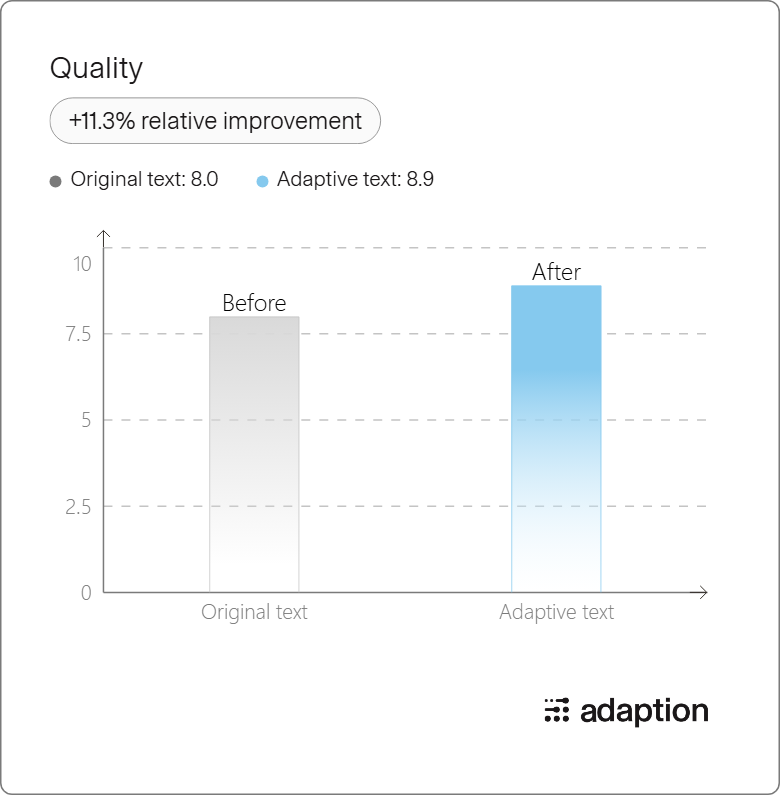
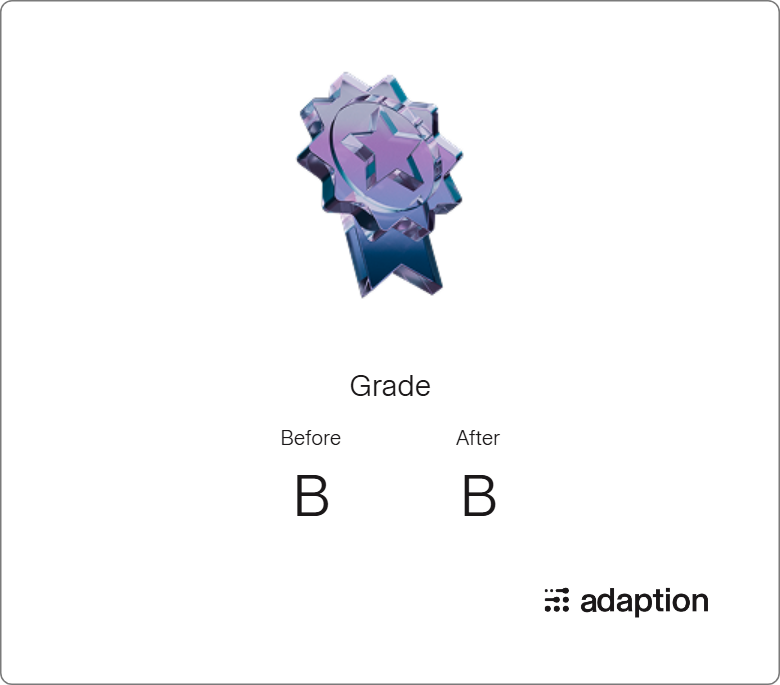
The final quality is B, with a relative quality improvement of 11.3%.
Domain
- Science (60%)
- Data-analysis-visualization (40%)
Language
- English (100%)
Tone
- Analytical (80%)
- Explanatory (20%)
Evaluation Results
Quality Gains:
Grade Improvement:
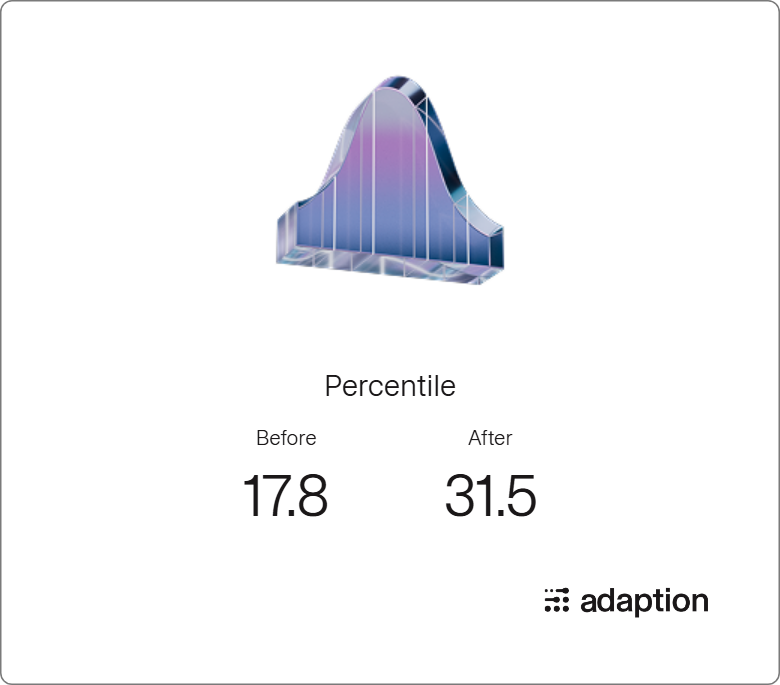
Percentile Chart:
- Downloads last month
- 21