

paper_name stringlengths 4 421 | paper_url stringlengths 21 200 | paper_authors listlengths 0 125 | paper_abstract stringlengths 0 43.4k | paper_code stringlengths 1 149 | conf stringlengths 6 18 |
|---|---|---|---|---|---|
Proceedings of the 32nd ACM SIGKDD Conference on Knowledge Discovery and Data Mining V.2, KDD 2026, Jeju Island, Korea, August 9-13, 2026 | https://doi.org/10.1145/3770855 | [
"Won Kim",
"Jae-Gil Lee",
"Kyuseok Shim",
"James Caverlee",
"David F. Gleich",
"Xiangliang Zhang",
"Qi He",
"Faisal Farooq",
"Rómer Rosales",
"Sayan Ranu",
"Haixun Wang",
"Yan Liu",
"Carl Yang",
"Leman Akoglu",
"Nitesh V. Chawla",
"Vagelis Papalexakis"
] | # | KDD2026 | |
Cross-modal Fusion Transformer for Integrating Retrieved Knowledge into Video Caption Generation | https://doi.org/10.1145/3770855.3818170 | [
"Karina Abubakirova",
"Waseem Ullah",
"Latif U. Khan",
"Mohsen Guizani"
] | In recent years, long-form video captioning has been an important task for indexing, accessibility, and downstream video analytics. However, it becomes challenging when videos are untrimmed and extend over minutes or hours. In these settings, visual evidence is often incomplete: objects are occluded, viewpoints shift, ... | # | KDD2026 |
NiWo: An Augmentation Framework to Enhance ML Performance and Interpretability for Tabular Data with Class Imbalance | https://doi.org/10.1145/3770855.3817894 | [
"Asif Ahmed",
"Sakhawat Hossain Saimon",
"Jianhua Ruan",
"Ke Yang"
] | Various data augmentation methods have been proposed to address class imbalance in Machine Learning (ML) and Artificial Intelligence tasks across multiple data modalities. For tabular data, augmentation methods must be interpretable so that human decision-makers can audit the process (e.g., which neighborhoods are bein... | # | KDD2026 |
AI-Assisted Variance Reduction in Randomized Experiments | https://doi.org/10.1145/3770855.3817896 | [
"David Arbour",
"Eli Ben-Michael",
"Avi Feller",
"Apoorva Lal",
"Lo-Hua Yuan"
] | Generative AI and large language models can produce realistic predictions of human behavior from rich, unstructured inputs with little to no task-specific training data. Recent work uses these ''digital twin'' predictions to supplement human responses in surveys and experiments. We study the special case of using AI-ge... | # | KDD2026 |
Realistic Counterfactual Explanations via Denial Constraints | https://doi.org/10.1145/3770855.3817712 | [
"Avia Asael",
"Daniel Deutch",
"Nave Frost",
"Amir Gilad"
] | In the realm of Explainable AI, classification results are often explained via counterfactuals (CFs for short), which are (ideally small) perturbations to an instance that lead to a change of classification label. Such CFs may serve as explanations for the prediction, pinpointing the features that were important. Exist... | # | KDD2026 |
Geometry-First Generative Spatial Single-Cell Reconstruction | https://doi.org/10.1145/3770855.3818141 | [
"Ehtesamul Azim",
"Muhtasim Noor Alif",
"Tae Hyun Hwang",
"Yanjie Fu",
"Wei Zhang"
] | Single-cell RNA sequencing (scRNA-seq) profiles large numbers of cells but loses spatial context, whereas spatial transcriptomics (ST) preserves partial spatial structure at lower resolution. Most existing integration methods either deconvolve spot mixtures or map cells onto a measured spot lattice, which ties reconstr... | # | KDD2026 |
Conditional PED-ANOVA: Hyperparameter Importance in Hierarchical & Dynamic Search Spaces | https://doi.org/10.1145/3770855.3817758 | [
"Kaito Baba",
"Yoshihiko Ozaki",
"Shuhei Watanabe"
] | We propose conditional PED-ANOVA (condPED-ANOVA), a principled framework for estimating hyperparameter importance (HPI) in conditional search spaces, where the presence or domain of a hyperparameter can depend on other hyperparameters. Although the original PED-ANOVA provides a fast and efficient way to estimate HPI wi... | https://github.com/kAIto47802/condPED-ANOVA | KDD2026 |
AFLiP: An Access-Recomputation Decoupling Framework for Efficient and Structure-Preserving GNN-based Link Prediction | https://doi.org/10.1145/3770855.3817973 | [
"Jeongmin Bae",
"Min-Soo Kim"
] | Many GNN-based link prediction models use a shared message-passing encoder to amortize node encoding across edges. However, in practice, neighborhood expansion makes the edge-level mini-batches approach near full-graph computation, weakening this benefit. Existing scalable techniques enable efficient mini-batch trainin... | # | KDD2026 |
Edge-Induced Subgraph Representation Learning | https://doi.org/10.1145/3770855.3818085 | [
"Seungryeol Baek",
"Hogun Park"
] | A variety of approaches have been proposed for subgraph-level representation learning. However, these approaches have primarily been developed and evaluated under node-induced subgraph settings, where each subgraph is defined by a selected set of nodes. In contrast, subgraph prediction tasks in which subgraphs are indu... | # | KDD2026 |
Take Control of Censoring, Generate Real-World Like Synthetic Data | https://doi.org/10.1145/3770855.3817857 | [
"Ghanem Bahrini",
"Morgane Barbet-Massin",
"Sébastien Razakarivony",
"Valérie Garès",
"Jean-François Dupuy"
] | Benchmarking survival models under varying censoring regimes requires data where censoring is both realistic and controllable. We propose a semi-synthetic framework that, starting from a real survival dataset, generates derived datasets with an exact user-specified censoring rate among initially uncensored subjects, th... | # | KDD2026 |
On the Push-Based Asynchronous Federated Learning: A Bias-Correction Aggregation Approach | https://doi.org/10.1145/3770855.3817925 | [
"Jiahui Bai",
"Hai Dong",
"A. K. Qin"
] | Asynchronous decentralized federated learning (ADFL) eliminates central coordination and global synchronization, making it attractive for large-scale and heterogeneous systems. However, frequent peer-to-peer communication, asynchronous updates on directed topologies, and non-IID data jointly lead to excessive communica... | # | KDD2026 |
NCCDA: Neuron-wise Class-Conditional Distribution Alignment for Deep Neural Network Repair | https://doi.org/10.1145/3770855.3818021 | [
"Liming Bao",
"Yan Wang",
"Tao Sun"
] | Neural network repair aims to correct prediction failures caused by multiple security threats—such as backdoor attacks, natural corruptions, and safety property violations—through limited adjustments to model parameters. However, most existing repair methods rely on single-sample, point-to-point correction strategies, ... | # | KDD2026 |
Directional Time Series Editing via Retrieval-Guided Jacobian-Vector Inference | https://doi.org/10.1145/3770855.3817865 | [
"Yifan Bao",
"Yihao Ang",
"Qiang Huang",
"Anthony K. H. Tung",
"Zhiyong Huang"
] | Time Series Editing (TSE) synthesizes realistic time series by modifying existing trajectories under user-specified conditions, with growing importance across many applications. However, existing TSE formulations are largely restricted to discrete or categorical controls and struggle to handle continuous condition shif... | https://github.com/AmethystQ/JAVELIN/ | KDD2026 |
Diagnosing Evidence Utilization in Multimodal Document Question Answering | https://doi.org/10.1145/3770855.3817956 | [
"Debolena Basak",
"Digbalay Bose",
"Koustava Goswami",
"Maunendra Sankar Desarkar"
] | Recent Multimodal Large Language Models (MLLMs) support retrieval-augmented generation (RAG) for document question answering (QA), yet it remains unclear how effectively they use the provided evidence during answer generation. In this work, we conduct a controlled empirical study of 7 popular MLLMs on long multimodal m... | # | KDD2026 |
Reinforcement Learning with Scenario-Context Rollout in Portfolio Management | https://doi.org/10.1145/3770855.3817999 | [
"Vanya Priscillia Bendatu",
"Yao Lu"
] | When economic structures and market dynamics shift, classic portfolio rebalancing algorithms often suffer from unstable and degraded performance. To improve the return and robustness of portfolio management, we explore reinforcement learning (RL) and propose Scenario-Context Rollout (SCR), a macroeconomics-guided feedb... | # | KDD2026 |
One Step Closer to Ground Truth: A Multi-Scale Residual-Aware Representation Learning Pipeline for Predicting Time Series Data | https://doi.org/10.1145/3770855.3817960 | [
"Amrijit Biswas",
"Mustafa Kamal",
"Robin Krambroeckers",
"Mirza M. Lutfe Elahi",
"Sifat Momen",
"Nabeel Mohammed",
"Shafin Rahman"
] | Transformer-based models have emerged as leading paradigms in time-series forecasting in recent years, employing self-attention mechanisms to capture long-range dependencies. Despite their success, these single-stage forecasting architectures exhibit persistent systematic residual biases arising from structural discrep... | # | KDD2026 |
A Data-Centric Decomposition of Estimator Performance in Continuous Treatment Effect Estimation | https://doi.org/10.1145/3770855.3817731 | [
"Christopher Bockel-Rickermann",
"Daan Caljon",
"Toon Vanderschueren",
"Tim Verdonck",
"Wouter Verbeke"
] | status: Published | # | KDD2026 |
iLTM: Integrated Large Tabular Model | https://doi.org/10.1145/3770855.3817810 | [
"David Bonet",
"Marçal Comajoan Cara",
"Alvaro Calafell",
"Daniel Mas Montserrat",
"Alexander G. Ioannidis"
] | Tabular data underpins decisions across science, industry, and public services. Despite rapid progress, advances in deep learning have not fully carried over to the tabular domain, where gradient-boosted decision trees (GBDTs) remain a default choice in practice. We present iLTM, an integrated Large Tabular Model that ... | # | KDD2026 |
Dynamic Spectral Denoising with Global-Context Attention for Multi-Behavior Recommendation | https://doi.org/10.1145/3770855.3818191 | [
"Miaomiao Cai",
"Yunshan Ma",
"Fangqi Zhu",
"Junfeng Fang",
"Zhijie Zhang",
"Zhiyong Cheng",
"Xiang Wang",
"See-Kiong Ng"
] | Multi-behavior recommendation improves target-behavior prediction by exploiting heterogeneous auxiliary feedback (e.g., view, collect, and cart), yet its robustness is undermined by behavior-dependent noise and inconsistency. We argue that the key bottleneck is a representation-level failure caused by two coupled heter... | # | KDD2026 |
Parallel Complex Diffusion for Scalable Time Series Generation | https://doi.org/10.1145/3770855.3817791 | [
"Rongyao Cai",
"Yuxi Wan",
"Kexin Zhang",
"Ming Jin",
"Zhiqiang Ge",
"Qingsong Wen",
"Yong Liu"
] | Diffusion models learn data distributions indirectly through denoising, making the difficulty of generative modeling closely tied to the dependency structure of data. For time series, strong temporal dependence forces the noise / score estimator to recover highly entangled cross-time relationships, leading to the curse... | https://github.com/RongyaoCai/PaCoDi | KDD2026 |
TimeBlocks: Versatile and Continual Time-Series Blockbase | https://doi.org/10.1145/3770855.3817919 | [
"David Campos",
"Bin Yang",
"Tung Kieu",
"Lei Chen",
"Chenjuan Guo",
"Christian S. Jensen"
] | The ongoing digitization has led to a proliferation of time-series data streams that monitor a variety of processes, from which valuable insights may be obtained. Further, the emergence of successful foundational language models begs the question of whether it is possible to achieve time-series models with the foundati... | # | KDD2026 |
APEX-SQL: Talking to the data via Agentic Exploration for Text-to-SQL | https://doi.org/10.1145/3770855.3818075 | [
"Bowen Cao",
"Weibin Liao",
"Yushi Sun",
"Dong Fang",
"Haitao Li",
"Wai Lam"
] | Text-to-SQL systems powered by Large Language Models have excelled on academic benchmarks but struggle in complex enterprise environments. The primary limitation lies in their reliance on static schema representations, which fails to resolve semantic ambiguity and scale effectively to large, complex databases. To addre... | https://github.com/Tencent/APEX-SQL-Project | KDD2026 |
Learning to Handle Constrained Routing Problems From a Decoupling Perspective | https://doi.org/10.1145/3770855.3817954 | [
"Rui Cao",
"Zhiguang Cao",
"Yihan Huang",
"Jiaqi Wang",
"Yuan Jiang",
"Yubin Xiao",
"You Zhou"
] | Neural Combinatorial Optimization (NCO) has emerged as a promising paradigm for solving Vehicle Routing Problems (VRPs), offering a compelling alternative to traditional heuristics. However, extending NCO to VRPs with complex constraints remains a significant challenge, as existing methods largely rely on hand-crafted ... | # | KDD2026 |
From Tool Traces to Strategy Banks: Mining Failure Signatures for Budgeted Repository-Level Code Repair | https://doi.org/10.1145/3770855.3817699 | [
"Shuang Cao",
"Rui Li"
] | Repository-level code repair generates rich tool traces, but most LLM agents discard this data and keep restarting from a fixed debugging loop. We present Evolutionary Self-Debugging Agents (ESDA), which mines tool traces into structured failure signatures and uses them to maintain a strategy bank of reusable debugging... | # | KDD2026 |
PROBE: Dense Process Rewards with Observation Evidence for Tool-Augmented Visual Reasoning | https://doi.org/10.1145/3770855.3818057 | [
"Zongsheng Cao",
"Anran Liu",
"Jun Xie",
"Feng Chen",
"Lang Chen",
"Zigan Wang"
] | Tool-augmented reasoning offers a promising paradigm for improving multimodal large language models (MLLMs) by offloading perception to external tools. Yet existing methods leave three trajectory-level failures unsupervised: incomplete process supervision (sub-goals are skipped), tool hallucination (cited tools are not... | # | KDD2026 |
UniDocVLM: Enhancing Visual Reasoning and Document Understanding for VLM via Reinforcement Learning | https://doi.org/10.1145/3770855.3817934 | [
"Zongsheng Cao",
"Anran Liu",
"Jun Xie",
"Lang Chen",
"Feng Chen",
"Zigan Wang"
] | Document question answering over scanned pages requires two coupled abilities: (i) canonicalizing complex layouts into a faithful textual structure, and (ii) selecting and reasoning over query-relevant evidence from that structure. Most existing pipelines decouple OCR from retrieval-augmented reasoning and optimize OCR... | # | KDD2026 |
BiasMap: Leveraging Cross-Attentions to Discover and Mitigate Hidden Social Biases in Text-to-Image Generation | https://doi.org/10.1145/3770855.3818098 | [
"Rajatsubhra Chakraborty",
"Xujun Che",
"Depeng Xu",
"Cori Faklaris",
"Xi Niu",
"Shuhan Yuan"
] | Bias discovery is critical for black-box generative models, especially text-to-image (TTI) models. Existing works predominantly focus on output-level demographic distributions, which do not necessarily guarantee concept representations to be disentangled post-mitigation. We propose BiasMap, a framework for uncovering l... | # | KDD2026 |
EARTH: Accelerating Spatiotemporal Network K-function-based Analytics | https://doi.org/10.1145/3770855.3817706 | [
"Tsz Nam Chan",
"Hongwei Ye",
"Leong Hou U",
"Yun Peng",
"Dingming Wu",
"Jianliang Xu",
"Christian S. Jensen"
] | The spatiotemporal network K-function is used widely in diverse domains, e.g., transportation science, criminology, and social science, for analyzing spatiotemporal point patterns in location datasets. Domain experts calculate multiple spatiotemporal network K-functions, considering different spatial and temporal thres... | https://github.com/edisonchan2013928/EARTH | KDD2026 |
HyperPatch: Sequential Knowledge Editing Under n-ary Structural Drift | https://doi.org/10.1145/3770855.3817820 | [
"Yu-Kai Chan",
"Wen-Sheng Lien",
"Dong-Ting Yao",
"Bo-Kai Ruan",
"Kwan-Yeung Lin",
"Hong-Han Shuai",
"Meng-Fen Chiang"
] | Large Language Models (LLMs) rely on Knowledge Editing (KE) to maintain temporal validity, yet real-world knowledge is inherently n-ary. We demonstrate that in non-stationary environments, sequential updates to complex relations induce Structural Drift, a phenomenon where the binary reification of n-ary events into tri... | https://github.com/Kevin20010912/HyperPatch.git | KDD2026 |
AnchorSteer: Self-Discovered Concept Injection for Structure-Preserving Music Editing | https://doi.org/10.1145/3770855.3818078 | [
"Chih-Heng Chang",
"Keng-Seng Ho",
"Chih-Yu Tsai",
"Kuan-Lin Chen",
"Yi-Hsuan Yang",
"Jian-Jiun Ding"
] | Controllable music editing is to modify high-level attributes while strictly preserving rhythmic and melodic structures. However, this task is challenged by a semantic-structural entanglement: steering methods often degrade structure to achieve editing performance, while structural adaptors suppress semantic responsive... | # | KDD2026 |
DAGPipe: Differentiable DAG Learning for Automated Data Preparation | https://doi.org/10.1145/3770855.3817984 | [
"Jing Chang",
"Chang Liu"
] | Automated data preparation is a critical bottleneck in machine learning on tabular data. Existing methods largely search over a fixed linear sequence of operations, even tools that branch by feature type use hand-specified, rule-based branches that cannot adapt operation composition to individual features. This limits ... | # | KDD2026 |
BethAgent: A Contract-Governed Multi-Agent Framework for Verified Cytology Super-Resolution with Safe Rollback | https://doi.org/10.1145/3770855.3817878 | [
"Wenzhe Chang",
"Jun Yin",
"Peilin Li"
] | Super-resolution (SR) can reduce acquisition burden, but methods optimized for image-level fidelity or perceptual sharpness may hallucinate fine structures not supported by the recorded low-resolution (LR) measurement, which is particularly harmful for morphology-driven screening. Guided by the Bethesda System's morpho... | # | KDD2026 |
Approximation and Learning-based Algorithms for Influence Maximization in Multilayer Social Networks | https://doi.org/10.1145/3770855.3817870 | [
"Xueqin Chang",
"Ruize Liu",
"Qing Liu",
"Baihua Zheng",
"Yunjun Gao"
] | Motivated by the observation that users in the real world often engage across multiple social networks simultaneously, we study the problem of influence maximization in multilayer social networks (Mlim), aiming to select a small set of nodes that maximizes the total influence spread across all layers. To this end, we i... | # | KDD2026 |
MORE-FE: Multi-Operator and Reinforcement Learning-Enhanced Evolution for LLM Feature Engineering | https://doi.org/10.1145/3770855.3817636 | [
"Chang-Yu Chao",
"Bryan Andersen",
"Xiao Xi Tan",
"Yi-Tse Lu",
"Shou-De Lin"
] | Traditional automated feature engineering (AFE) minimizes human intervention but often neglects semantic relationships among original features, resulting in redundant or uninterpretable transformations. While recent methods leverage the domain knowledge and reasoning capabilities of Large Language Models (LLMs), they t... | # | KDD2026 |
STM3: Mixture of Multiscale Mamba for Long-Term Spatio-Temporal Time-Series Prediction | https://doi.org/10.1145/3770855.3817653 | [
"Haolong Chen",
"Liang Zhang",
"Zhengyuan Xin",
"Guangxu Zhu"
] | Recently, spatio-temporal time-series prediction has developed rapidly, yet existing deep learning methods struggle with learning complex long-term spatio-temporal dependencies efficiently. The long-term spatio-temporal dependency learning brings two new challenges: 1) The long-term temporal sequence naturally includes... | https://github.com/IfReasonable/STM3_KDD26 | KDD2026 |
Counterfactual Analysis on Large Graphs | https://doi.org/10.1145/3770855.3817647 | [
"Hsi-Wen Chen",
"Jian Pei",
"De-Nian Yang",
"Ming-Syan Chen"
] | Counterfactual analysis aims to identify minimal and semantically meaningful changes that alter a model's prediction. Existing perturbation approaches generate counterfactuals by directly editing nodes, edges, or attributes, often producing explanations that are model-dependent and detached from the underlying data dis... | # | KDD2026 |
LoRAShield: Data-Free Editing Alignment for Secure Personalized LoRA Sharing | https://doi.org/10.1145/3770855.3817625 | [
"Jiahao Chen",
"Junhao Li",
"Yiming Wang",
"Yong Yang",
"Yi Jiang",
"Chunyi Zhou",
"Qingming Li",
"Tianyu Du",
"Shouling Ji"
] | The proliferation of Low-Rank Adaptation (LoRA) has democratized personalized text-to-image generation, enabling users to share lightweight models (e.g., personal portraits) on platforms like Civitai and Liblib. However, this ''share-and-play'' ecosystem introduces critical but unnoticed risks: benign LoRAs can be weap... | # | KDD2026 |
Uncovering Competing Poisoning Attacks in Retrieval-Augmented Generation | https://doi.org/10.1145/3770855.3818119 | [
"Liuji Chen",
"Xiaofang Yang",
"Yuanzhuo Lu",
"Jinghao Zhang",
"Xin Sun",
"Qiang Liu",
"Shu Wu",
"Jing Dong",
"Liang Wang"
] | Retrieval-Augmented Generation (RAG) systems improve the factual grounding of large language models (LLMs) but remain vulnerable to retrieval poisoning, where adversaries seed the corpus with manipulated content. Prior work largely evaluates this threat under a simplified single-attacker assumption. In practice, howeve... | https://github.com/LiujiChen/Uncovering-Competing-Poisoning-Attacks-in-Retrieval-Augmented-Generation | KDD2026 |
HazardFlow: Enhancing Health Status Representations via Score-based Energy Modeling | https://doi.org/10.1145/3770855.3817616 | [
"Qianyu Chen",
"Xin Li",
"Yonggang Zhang",
"Mingzhong Wang"
] | Learning effective health status representations from Electronic Health Records (EHRs) is essential for accurate health risk prediction. While data-driven models have advanced this field, most existing approaches rely on heuristic patterns and often struggle to capture subtle risk dynamics, specifically under imbalance... | # | KDD2026 |
DivCDSR: A Model-Agnostic Framework for Diverse Cross-Domain Sequential Recommendation | https://doi.org/10.1145/3770855.3817931 | [
"Shu Chen",
"Yuhan Zhao",
"Weixin Chen",
"Weike Pan",
"Li Chen"
] | While Cross-Domain Sequential Recommendation (CDSR) has proven effective in mitigating data sparsity and enhancing accuracy, its impact on recommendation diversity remains largely unexplored. We are the first to reveal a counterintuitive phenomenon: while CDSR improves accuracy, it often comes at the cost of diversity,... | https://github.com/Asuei-cs/DivCDSR | KDD2026 |
Test-Time Deep Thinking to Explore Implicit Rules | https://doi.org/10.1145/3770855.3817790 | [
"Wentong Chen",
"Xin Cong",
"Zhong Zhang",
"Yaxi Lu",
"Siyuan Zhao",
"Yesai Wu",
"Qinyu Luo",
"Haotian Chen",
"Yankai Lin",
"Zhiyuan Liu",
"Maosong Sun"
] | With the continuous advancement of Large Language Models (LLMs), intelligent agents are becoming increasingly vital. However, these agents often fail in environments governed by implicit rules—hidden constraints that cannot be observed directly and must be inferred through interaction. This causes agents to fall into r... | # | KDD2026 |
MAR: Metacognitive Agentic Reasoning for Multimodal Fake News Detection | https://doi.org/10.1145/3770855.3818025 | [
"Wenyu Chen",
"Hengbing Dong",
"Junhao Wa",
"Ping Wei",
"Sixing Wu",
"Wei Zhou"
] | Multimodal fake news combining text and images has become increasingly prevalent, fueled by the rapid dissemination on social media. Existing approaches predominantly rely on supervised learning–driven small multimodal language models, yet they are constrained by the knowledge scope and logical reasoning capabilities l... | https://github.com/Averdgr/MAR_KDD | KDD2026 |
LF-Filter: Differentiated Processing for Intra-Flow Packet Delay Monitoring in High-Speed Data Streams | https://doi.org/10.1145/3770855.3817702 | [
"Xiang Chen",
"Zhengli Lin",
"Lida Liao",
"Longlong Zhu",
"Linying Zheng",
"Jiashuo Yu",
"Yimeng Liu",
"Jiajie Su",
"Yiheng Xu",
"Pengchao Yao",
"Hongyan Liu",
"Dong Zhang",
"Chunming Wu"
] | Monitoring inter-event delays in high-speed data streams is fundamental to anomaly detection and temporal pattern discovery. A representative instance in production infrastructures is intra-flow packet delay (IFPD), i.e., the time interval between consecutive packets of the same flow. It serves as a critical metric for... | # | KDD2026 |
Temporal Graph Prototype-conditioned Conformal Prediction for Fraud Detection | https://doi.org/10.1145/3770855.3818061 | [
"Xudong Chen",
"Shengbo Gong",
"Lu Cheng",
"Wei Jin"
] | Conformal prediction (CP) provides distribution-free coverage guarantees and has emerged as a principled tool for uncertainty quantification. In edge-level fraud detection on temporal interaction graphs, where false positives and false negatives both carry substantial cost, such coverage guarantees are particularly app... | https://github.com/Picard1701ent/ProtoCP.git | KDD2026 |
LC-ERD: Mining Latent Logic for Self-Evolving Reasoning via Consistency-Regulated Reward Decomposition | https://doi.org/10.1145/3770855.3817617 | [
"Yanyu Chen",
"Jiyue Jiang",
"Dianzhi Yu",
"Zheng Wu",
"Jiahong Liu",
"Jiaming Han",
"Xiao Guo",
"Jinhu Qi",
"Yu Li",
"Yifei Zhang",
"Irwin King"
] | The evolution of Large Language Model (LLM) reasoning is bottlenecked by the scarcity of high-quality process data. While self-alignment via endogenous rewards offers a solution, mining valid supervision faces three challenges: (1) Label Noise via Mimetic Bias, where rewards prioritize statistical likelihood over logic... | https://github.com/LC-ERD-repo/LC-ERD | KDD2026 |
Unified Spatio-Temporal Tokens are Bases for Generalizable Traffic Forecasting | https://doi.org/10.1145/3770855.3817746 | [
"Yujun Chen",
"Shihao Tu",
"Wenyue Ding",
"Yicheng Lu",
"Qingkai Ren",
"Yangjie Zheng",
"Yang Yang"
] | Traffic forecasting plays a crucial role in real-world applications such as traffic management and urban planning. Recent studies have mainly focused on spatio-temporal graph neural networks (STGNNs) and attention-based methods, which have shown promising results. Nevertheless, both approaches model spatial information... | https://github.com/JimmyChen6/STUNet | KDD2026 |
SIMS: Scale-Invariant Merit-Function-Based Scalarization for Multi-Task Learning | https://doi.org/10.1145/3770855.3818042 | [
"Zebin Chen",
"Fei Xing",
"Yang Chen",
"Hua Liu",
"Andy H. F. Chow",
"Yuhua Qian",
"Yu Zhang"
] | Multi-task learning (MTL) requires navigating unavoidable trade-offs among competing objectives. This paradigm is frequently formulated as multi-objective optimization (MOO), where the scalarization is favored to reduce an MOO problem to a single objective. We empirically find that existing merit-function-based scalari... | # | KDD2026 |
A Non-parametric Multi-view Model for Short Text Clustering | https://doi.org/10.1145/3770855.3817827 | [
"Enhao Cheng",
"Xiaolong Zheng",
"Jintong Li",
"Juncheng Hou",
"Fan Liu",
"Xuemeng Song",
"Tian Gan",
"Jianhua Yin"
] | Short text clustering has become increasingly important with the popularity of social media. Existing methods fall into three paradigms: those based on topic models, deep representation learning, and large language models (LLMs). The first relies on the bag-of-words assumption, which ignores word order and semantic inf... | https://github.com/chehaoa/NMVM | KDD2026 |
CCD: Capturing Cross-Correlations with Deformable Convolutional Networks for Multivariate Time Series Forecasting | https://doi.org/10.1145/3770855.3817648 | [
"Hanyin Cheng",
"Xingjian Wu",
"Xiangfei Qiu",
"Yang Shu",
"Bin Yang",
"Chenjuan Guo"
] | The accuracy of Multivariate Time Series Forecasting relies on capturing precise channel correlations. Recent studies have primarily focused on capturing distinct channel relationships within each individual frequency and scale. However, complex channel dependencies are more prominently found in correlations across sca... | # | KDD2026 |
Generating Graph-Like Logical Rules for Knowledge Graph Reasoning via Diffusion Models | https://doi.org/10.1145/3770855.3817814 | [
"Haoxiang Cheng",
"Yunfei Wang",
"Chao Chen",
"Kewei Cheng",
"Zhipeng Lin",
"Haoxuan Li",
"Changjun Fan",
"Shixuan Liu"
] | Logical rules constitute a cornerstone of knowledge graph (KG) reasoning, valued for their interpretability and ability to model relational patterns. However, existing rule mining methods predominantly focus on simple chain-like rules and therefore neglect the richer relational information encoded in graph-like structu... | https://github.com/Haoxiang-Cheng/GRiD | KDD2026 |
NodeBits: A Plug-and-Play Framework for Accelerating Graph Inference by Post-Hoc Binary Quantization | https://doi.org/10.1145/3770855.3817681 | [
"Qihao Cheng",
"Tianhao Wu",
"Da Yan",
"Haoran Tang"
] | Graph neural networks (GNNs) have become a leading paradigm for graph learning, powering numerous applications, such as recommender systems in e-commerce and social platforms. However, GNN inference requires expensive propagation and aggregation of node features and feature gradients, repeated across layers, the cost o... | # | KDD2026 |
Instance Specific Approximations for Unconstrained Submodular Maximization with Modular Costs | https://doi.org/10.1145/3770855.3817612 | [
"Tong Cheng",
"Xueyan Tang"
] | Subset selection for profit maximization is important to applications like web mining, recommendation, and machine learning, which are commonly modeled as unconstrained submodular maximization with modular costs (USM-MC) \max_S\subseteq V f(S)-łambda c(S) where f is a nonnegative monotone submodular utility function, c... | # | KDD2026 |
Causal Estimation of Share-Induced Engagement with Flywheel Effects | https://doi.org/10.1145/3770855.3817849 | [
"Weitao Cheng",
"Yilin Li",
"Yong Wang",
"Nian Si"
] | Sustainable user growth in online platforms depends not only on acquiring new users but also on reactivating and engaging existing ones through social sharing features. A well-designed sharing feature can trigger a self-reinforcing ''flywheel effect'': reactivated users become potential sharers whose engagement propaga... | # | KDD2026 |
Can Fine-Tuning Erase Edits? On the Fragile Coexistence of Knowledge Editing and Fine-tuning | https://doi.org/10.1145/3770855.3817879 | [
"Yinjie Cheng",
"Paul Youssef",
"Christin Seifert",
"Jörg Schlötterer",
"Zhixue Zhao"
] | Knowledge editing (KE) offers a lightweight alternative to retraining for updating large language models (LLMs). Meanwhile, fine-tuning remains the default operation for adapting LLMs to new domains and tasks. Despite their widespread adoption, these two post-training interventions have been studied in isolation, leavi... | # | KDD2026 |
Explicit Retrieval, Implicit Cognition: Towards Personalized Micro-video Popularity Prediction via Dual Latent Memory | https://doi.org/10.1145/3770855.3818184 | [
"Zhangtao Cheng",
"Bo Chen",
"Meihui Zhong",
"Ting Zhong",
"Bing Xia",
"Fan Zhou"
] | Micro-video popularity prediction (MVPP) is crucial for product marketing and recommendation. Existing works typically predict popularity by using independent modality encoders, but are limited by a personalized reasoning bottleneck: a tendency to lose grounding in multimodal evidence and a lack of personalized experie... | # | KDD2026 |
AdaKoop: Efficient Modeling of Nonlinear Dynamics from Nonstationary Data Streams with Koopman Operator Regression | https://doi.org/10.1145/3770855.3817851 | [
"Naoki Chihara",
"Ren Fujiwara",
"Yasuko Matsubara",
"Yasushi Sakurai"
] | Real-time data analysis requires the ability to accurately and adaptively address nonlinear dynamics in a nonstationary data stream while preserving computational efficiency. However, nonlinear dynamics are so complex that capturing dynamically changing nonlinear patterns and utilizing them for downstream tasks under s... | # | KDD2026 |
Moment Matters: Mean and Variance Causal Graph Discovery from Heteroscedastic Observational Data | https://doi.org/10.1145/3770855.3817708 | [
"Yoichi Chikahara"
] | Heteroscedasticity---where the variance of a variable changes with other variables---is pervasive in real data, and elucidating why it arises from the perspective of statistical moments is crucial in scientific knowledge discovery and decision-making. However, standard causal discovery does not reveal which causes act ... | # | KDD2026 |
Stabilizing Causal Structure Learning under Heteroscedasticity: Analysis and Mitigation of Optimization Failures | https://doi.org/10.1145/3770855.3818156 | [
"Eunjung Choi",
"Seonggyeom Kim",
"Dong-Kyu Chae"
] | This study focuses on learning causal directed acyclic graphs (DAGs) under heteroscedastic noise models (HNMs), where each effect is modeled as a function of its causes and a Gaussian noise term whose variance depends on the causes. While HNMs theoretically guarantee identifiability of causal structures, we show that g... | https://github.com/Sinegi/HNM | KDD2026 |
Learning Robust Hypergraph Embeddings for Distribution-Free Uncertainty Quantification | https://doi.org/10.1145/3770855.3818095 | [
"Akash Choudhuri",
"Bijaya Adhikari"
] | Hypergraph representation learning has gained immense popularity over the last few years due to its applications in real-world domains like social network analysis, recommendation systems, biological network modeling, and knowledge graphs. However, hypergraph neural networks (HGNNs) lack rigorous uncertainty estimates,... | # | KDD2026 |
SPOT: Span-level Pause-of-Thought for Efficient and Interpretable Latent Reasoning in Large Language Models | https://doi.org/10.1145/3770855.3818055 | [
"Yunlong Chu",
"Minglai Shao",
"Yuhang Liu",
"Bing Hao",
"Yumeng Lin",
"Jialu Wang",
"Ruijie Wang"
] | Explicit Chain-of-Thought (CoT) improves the reasoning performance of large language models (LLMs) but often incurs high inference cost due to verbose token-level traces. While recent approaches reduce this overhead via concise prompting or step pruning, they largely truncate what the model says rather than internalize... | # | KDD2026 |
Quantized Model Soup Shake-Up: Weight Perturbation for Enhanced Ensemble Diversity | https://doi.org/10.1145/3770855.3817826 | [
"Jinwoo Chung",
"Sungyeop Jung",
"Weronika Czorapinska",
"Jangho Kim"
] | Model soup, averaging the weights of multiple fine-tuned models, delivers ensemble-level accuracy at single-model inference cost, but its success requires both linear mode connectivity (LMC) and sufficient diversity among candidates. We study these two requirements under quantization-aware training (QAT). First, we sho... | # | KDD2026 |
Rethinking the Stealthiness of Cryptographically Undetectable Backdoors in Practical RFF Learning | https://doi.org/10.1145/3770855.3817768 | [
"Tianshuo Cong",
"Pei Li",
"Haojie Wu",
"Jinyuan Liu",
"Tairong Huang",
"Guoyan Zhang",
"Anyu Wang"
] | Random Fourier Features (RFF) learning is a classical technique in scalable data mining. However, at FOCS 2022, Goldwasser et al. proposed a theoretical framework for planting cryptographically undetectable backdoors in RFF learning based on the hardness of the Continuous Learning With Errors (CLWE) problem. Their cons... | # | KDD2026 |
Rethinking Time Series Anomaly Detection from a Dynamic Perspective: Temporal-Frequency-Curvature Fusion | https://doi.org/10.1145/3770855.3817936 | [
"Hang Cui",
"Zexin Wang",
"Changhua Pei",
"Juncheng Hu",
"Haotian Si",
"Quan Zhou",
"Cenjie Hu",
"Jingjing Li",
"Dan Pei",
"Gaogang Xie"
] | Time series anomaly detection (TSAD) plays a pivotal role in domains ranging from industrial automation to IT operations and healthcare monitoring. Despite significant advances in point-wise outlier detection, real anomalies are often not obvious spikes. Instead, they frequently manifest as mechanism shifts, subtle cha... | # | KDD2026 |
SymDiag: Explainable Diagnosis for LLM Reasoning via Neuro-Symbolic Verification | https://doi.org/10.1145/3770855.3818004 | [
"Wenyao Cui",
"Huaping Zhang",
"Yongyi Huang",
"Qiuchi Li",
"Jian Xu",
"Cheng-Lin Liu",
"Chunxiao Gao",
"Juan Wang",
"Baohua Zhang"
] | Large language models (LLMs) increasingly serve as data-driven reasoners, yet their chains-of-thought (CoT) can be unfaithful even when final answers are correct. Most existing ''verification'' signals are not diagnostic: answer matching observes only the outcome, LLM-as-judge provides subjective and non-verifiable cri... | # | KDD2026 |
GraphMind: Unveiling Scientific Reasoning through Contextual Graphs for Novelty Assessment | https://doi.org/10.1145/3770855.3818195 | [
"Italo Luis da Silva",
"Hanqi Yan",
"Lin Gui",
"Yulan He"
] | Assessing scientific novelty is inherently complex, requiring evaluation of both a paper's internal structure and its contribution within the broader research landscape. Existing large language model (LLM) approaches often rely on surface-level similarity or citation retrieval, overlooking the integration between a pap... | # | KDD2026 |
The Confidence Trap: Calibration Attacks for Graph Neural Networks | https://doi.org/10.1145/3770855.3817898 | [
"Cuong Dang",
"Jiahao Zhang",
"Hieu Ta Quang",
"Dung Le",
"Lu Cheng",
"Suhang Wang"
] | While confidence calibration is essential for trustworthy decision-making in safety-critical applications, the robustness of calibrated GNNs to adversarial structural perturbations remains largely unexplored. However, studying calibration attacks on graphs presents unique technical challenges: (1) the discrete nature o... | https://github.com/CaptainCuong/Graph-Calibration-Attack.git | KDD2026 |
SGS-GNN: A Supervised Graph Sparsifier for Graph Neural Networks | https://doi.org/10.1145/3770855.3818110 | [
"Siddhartha Shankar Das",
"Naheed Anjum Arafat",
"Muftiqur Rahman",
"S. M. Ferdous",
"Alex Pothen",
"Mahantesh Halappanavar",
"Danda B. Rawat"
] | We propose SGS-GNN, a supervised graph sparsifier for Graph Neural Networks (GNNs) to improve predictive performance and reduce the cost of message passing by removing task-irrelevant edges. Existing unsupervised sparsifiers are not task-aware, while existing supervised sparsifiers suffer from significant memory overhe... | # | KDD2026 |
From Latent to Observable Position-Based Click Models in Carousel Interfaces | https://doi.org/10.1145/3770855.3818211 | [
"Santiago de Leon-Martinez",
"Róbert Móro",
"Branislav Kveton",
"Mária Bieliková"
] | Click models are a central component of learning and evaluation in recommender systems, yet most existing models are designed for single ranked list interfaces. In contrast, modern recommender platforms increasingly use complex interfaces, such as carousels, which consist of multiple swipeable lists that enable complex... | # | KDD2026 |
A Unified Model for Personalization: Language-Steerable Generative Recommendation, Search, and User Understanding | https://doi.org/10.1145/3770855.3817955 | [
"Marco De Nadai",
"Edoardo D'Amico",
"Max Lefarov",
"Alexandre Tamborrino",
"Divita Vohra",
"Mark VanMiddlesworth",
"Shawn Lin",
"Jacqueline Wood",
"Jan Stypka",
"Eliza Klyce",
"Keshi Dai",
"Matthew N. K. Smith",
"Timothy Christopher Heath",
"Martin D. Gould",
"Yves Raimond",
"Sandeep ... | Large language models (LLMs) are increasingly applied to recommendation, retrieval, and reasoning, yet deploying a single end-to-end model that can jointly support these behaviors over large, heterogeneous catalogs remains challenging. Such systems must generate unambiguous references to real items, handle multiple ent... | # | KDD2026 |
Random-Access Ranked Retrieval and Similarity Search | https://doi.org/10.1145/3770855.3817969 | [
"Mohsen Dehghankar",
"Abolfazl Asudeh",
"Raghav Mittal",
"Suraj Shetiya",
"Gautam Das"
] | We extend Random Access, a fundamental operation that enables efficient search and exploration algorithms, to the modern interactive data systems based on Ranked Retrieval and Similarity Search, where orderings are dynamically defined over a high-dimensional feature space. This extension enables efficient solutions for... | # | KDD2026 |
Integrating Inductive Biases in Transformers via Distillation for Financial Time Series Forecasting | https://doi.org/10.1145/3770855.3817749 | [
"Yu-Chen Den",
"Kuan-Yu Chen",
"Kendro Vincent",
"Tien-Hao Chang"
] | Transformer-based models have been widely adopted for generic time-series forecasting due to their high representational capacity and architectural flexibility. However, many Transformer variants implicitly assume stationarity and stable temporal dynamics—assumptions that are routinely violated in financial markets cha... | # | KDD2026 |
DeMix: Debugging Training Data with Mixed Data Error Types by Investigating Influence Vectors | https://doi.org/10.1145/3770855.3817774 | [
"Jiale Deng",
"Yanyan Shen",
"Xiaogang Shi",
"Junjun Chai"
] | High-quality training data is essential for the success of machine learning models. However, real-world datasets often contain mixed types of errors arising from systematic flaws in data preparation pipelines, including label errors, feature errors, and spurious correlations. Effective debugging of training data requir... | https://github.com/SJTU-DMTai/DeMix | KDD2026 |
Frequency-Domain Multi-Modality Transportation Modeling | https://doi.org/10.1145/3770855.3818022 | [
"Jiewen Deng",
"Hangchen Liu",
"Junchen Li",
"Boyuan Zhang",
"Renhe Jiang"
] | Multi-modality transportation refers to urban systems composed of multiple transportation modes, such as traffic flow and public transit, whose dynamics are coupled by shared temporal patterns. Accurate multi-modality transportation forecasting remains challenging because (1) different modalities exhibit distinct spect... | https://github.com/beginner-sketch/FreMo | KDD2026 |
Accelerating Graph-Based RAG Retrieval via Locality-Aware Device-Cloud Collaboration | https://doi.org/10.1145/3770855.3817674 | [
"Yongheng Deng",
"Tianyuan Jiang",
"Zhenya Ma",
"Hao Wu",
"Yongjian Fu",
"Hao Pan",
"Sheng Yue",
"Ju Ren"
] | Retrieval-Augmented Generation (RAG) grounds large language models in external knowledge and has become a key technique for knowledge-intensive tasks. As knowledge bases continue to scale, however, the retrieval stage increasingly dominates end-to-end latency, limiting the responsiveness of RAG systems. In this paper, ... | # | KDD2026 |
A Perturbation-Augmented Unsupervised Learning Framework for Integer Linear Programming | https://doi.org/10.1145/3770855.3817737 | [
"Yufan Deng",
"Tianle Pu",
"Zhijing Hu",
"Zijie Geng",
"Li Zeng",
"Xingchen Hu",
"Kuihua Huang",
"Junjie Wu",
"Changjun Fan"
] | Integer linear programming (ILP) plays a pivotal role in combinatorial optimization, with applications ranging from logistics to scheduling. Recently, unsupervised learning has emerged as a promising paradigm for solving ILPs without costly labeled solutions. However, existing methods often converge prematurely to pola... | # | KDD2026 |
Advancing Multimodal Fusion on Heterogeneous Medical Data with Hybrid Geometry Attention | https://doi.org/10.1145/3770855.3817885 | [
"Joy Dhar",
"Manish Kumar Pandey",
"Nayyar Zaidi",
"Chen Chen",
"Maryam Haghighat",
"Ferdous Sohel",
"Puneet Goyal"
] | Multimodal fusion learning (MFL) (a framework to jointly learn from heterogeneous data sources) has shown great potential in various fields such as Medicine, Science, and Engineering. It is extremely desirable in the medical domain, where we are faced with disparate data modalities such as imaging, clinical records, an... | # | KDD2026 |
Rewarding Engagement and Personalization in Popularity-Based Rankings Amplifies Extremism and Polarization | https://doi.org/10.1145/3770855.3818037 | [
"Jacopo D'Ignazi",
"Emma Fraxanet",
"Andreas Kaltenbrunner",
"Gaël Le Mens",
"Fabrizio Germano",
"Vicenç Gómez"
] | Despite extensive research, the mechanisms through which online platforms shape extremism and polarization remain poorly understood, largely because observational settings make it difficult to identify causal effects. We propose a framework that analyses a specific mechanism: the feedback loop between popularity-based ... | # | KDD2026 |
UniGCRec: Unified User-Item Quantization for Generative Cross-Domain Recommendation | https://doi.org/10.1145/3770855.3818132 | [
"Chaoyue Ding",
"Jiahao Liu",
"Dongsheng Li",
"Shengkang Gu",
"Hansu Gu",
"Peng Zhang",
"Ning Gu",
"Tun Lu"
] | Cross-domain sequential recommendation (CDSR) improves target-domain prediction by leveraging multi-domain interaction histories. Most CDSR methods rely on shared entities or co-occurrence signals, which become unreliable when overlap is limited, and atomic ID representations further generalize poorly to long-tail or u... | # | KDD2026 |
AlphaEval: A Comprehensive and Efficient Evaluation Framework for Formula Alpha Mining | https://doi.org/10.1145/3770855.3817727 | [
"Hongjun Ding",
"Binqi Chen",
"Jinsheng Huang",
"Taian Guo",
"Zhengyang Mao",
"Guoyi Shao",
"Lutong Zou",
"Luchen Liu",
"Ming Zhang"
] | Formula alpha mining, which generates predictive signals from financial data, is critical for quantitative investment. Although various algorithmic approaches-such as genetic programming, reinforcement learning, and large language models-have significantly expanded the capacity for alpha discovery, systematic evaluatio... | # | KDD2026 |
Is Fairness Truly Fair? Towards Reliable Lipschitz Fairness in Multi-Task Learning via Fixed-δ Alignment | https://doi.org/10.1145/3770855.3817938 | [
"Junbo Ding",
"Xin Zang",
"Chenchen Pan",
"Donghao Song",
"Jiaxin Zhu",
"Danhuai Guo"
] | Lipschitz-style individual fairness formalizes the idea that semantically similar examples should receive similar predictions, but its evaluation in multi-task learning (MTL) can be confounded by method-induced representation scales. This paper identifies threshold confounding: when the auditing tolerance is derived fr... | # | KDD2026 |
On the Memorization and Generalization of Generative Recommendation | https://doi.org/10.1145/3770855.3818148 | [
"Yijie Ding",
"Zitian Guo",
"Jiacheng Li",
"Letian Peng",
"Shuai Shao",
"Wei Shao",
"Xiaoqiang Luo",
"Luke Simon",
"Jingbo Shang",
"Julian J. McAuley",
"Yupeng Hou"
] | A widely held hypothesis for why generative recommendation (GR) models outperform conventional item ID-based models is that they generalize better. However, there is few systematic way to verify this hypothesis beyond a superficial comparison of overall performance. To address this gap, we categorize each data instance... | https://github.com/Jamesding000/MemGen-GR | KDD2026 |
A Geometric Information Bottleneck for Activation Steering | https://doi.org/10.1145/3770855.3818109 | [
"Toan Doan",
"Thin Nguyen",
"Sunil Gupta"
] | Activation-based steering methods for large language models often induce broad, entangled changes in model behavior, inadvertently altering capabilities unrelated to the intended behavior, which limits their reliability for fine-grained behavioral control. We address this limitation by reframing behavioral intervention... | # | KDD2026 |
An Exterior-Embedding Neural Operator Framework for Preserving Conservation Laws | https://doi.org/10.1145/3770855.3818165 | [
"Huanshuo Dong",
"Hong Wang",
"Hao Wu",
"Zhiwei Zhuang",
"Xuanze Yang",
"Ruiqi Shu",
"Yuan Gao",
"Xiaomeng Huang"
] | Neural operators have demonstrated considerable effectiveness in accelerating the solution of time-dependent partial differential equations (PDEs) by directly learning governing physical laws from data. However, for PDEs governed by conservation laws(e.g., conservation of mass, energy, or matter), existing neural opera... | # | KDD2026 |
Road-Constrained Vehicle Trajectory Recovery from Traffic Video Using Spatio-Temporal Voxel Representation | https://doi.org/10.1145/3770855.3817633 | [
"Taihang Dong",
"Jun Zhang",
"Ping Chen",
"Rongkai Wang",
"Yu Fu",
"Dingyu Yang"
] | Road-constrained trajectory recovery from traffic surveillance videos has become a critical component in applications ranging from intelligent transportation to urban planning. Existing approaches typically perform explicit camera-road matching, which either relies on labor-intensive camera calibration or suffers from ... | # | KDD2026 |
Structure-Guided Semi-Supervised Clustering via Evolving Star Network | https://doi.org/10.1145/3770855.3817628 | [
"Zi-Han Dong",
"Wen-Bo Xie",
"Tao Deng",
"Bin Chen",
"Tian Zou",
"Yan-Li Lee",
"Xin Wang",
"Jing-hao Liang"
] | Most existing semi-supervised clustering methods rely on dense similarity graphs or global embedding transformations, which incur prohibitive time and space costs and hinder real-world scalability. Moreover, these methods often query user supervision uniformly, leading to redundant and costly annotations. To tackle the... | https://github.com/Fly-By-Universe/EvoStar_SIGKDD2026.git | KDD2026 |
DA2-Unlearn: Dual-Adaptive Forget-Repair-Based Recommendation Unlearning | https://doi.org/10.1145/3770855.3818203 | [
"Haocheng Dou",
"Tao Lian",
"Xuemeng Song",
"Pengjie Ren"
] | Modern recommender systems increasingly face recommendation unlearning requests, where specific user-item interactions must be revoked due to interest drift, accidental feedback, data poisoning, or privacy concerns. The forget-and-retain unlearning paradigm has gained increasing attention. However, existing approaches ... | # | KDD2026 |
C2KV: Compressed and Composable KV Cache Reuse for Efficient LLM Inference | https://doi.org/10.1145/3770855.3817715 | [
"Chuheng Du",
"Junyi Chen",
"Hanlin Tang",
"Kan Liu",
"Tao Lan",
"Lin Qu",
"Chaoyue Niu",
"Shengzhong Liu",
"Guihai Chen",
"Fan Wu"
] | Long-context inference is central to modern large language model (LLM) applications such as retrieval-augmented generation. To mitigate the growing inference cost, recent work has explored non-prefix key-value (KV) cache reuse to reduce redundant prefill computation. However, existing reuse methods primarily focus on c... | # | KDD2026 |
Scalable Multi-Action Offline Policy Learning with an m-ary Tree | https://doi.org/10.1145/3770855.3817861 | [
"Shusei Eshima"
] | Decision trees are widely used as interpretable policies for personalized treatment assignment. However, existing methods face practical challenges: binary trees can be too restrictive to capture complex heterogeneity, and tree-search algorithms often fail to scale to industrial datasets with tens of millions of observ... | # | KDD2026 |
Uncertainty-aware Generative Recommendation | https://doi.org/10.1145/3770855.3817975 | [
"Chenxiao Fan",
"Chongming Gao",
"Yaxin Gong",
"Haoyan Liu",
"Fuli Feng",
"Xiangnan He"
] | Generative Recommendation has emerged as a transformative paradigm, reformulating recommendation as an end-to-end autoregressive sequence generation task. Despite its promise, existing preference optimization methods typically rely on binary outcome correctness, suffering from a systemic limitation we term uncertainty ... | https://github.com/cxfann/UGR | KDD2026 |
MLaGA: Multimodal Large Language and Graph Assistant | https://doi.org/10.1145/3770855.3818077 | [
"Dongzhe Fan",
"Jiajin Liu",
"Yi Fang",
"Djellel Difallah",
"Qiaoyu Tan"
] | Large language models (LLMs) have shown strong potential in graph learning by enabling powerful reasoning and broad generalization. However, existing Graph LLMs remain confined to textual graphs, where node features are represented solely by textual descriptions. This narrow focus overlooks a growing class of multimoda... | # | KDD2026 |
PLACE: Prompt Learning for Attributed Community Search in Large Graphs | https://doi.org/10.1145/3770855.3817833 | [
"Shuheng Fang",
"Kangfei Zhao",
"Rener Zhang",
"Yu Rong",
"Jeffrey Xu Yu"
] | Attributed Community Search (ACS) aims to identify communities in an attributed graph with structural cohesiveness and attribute homogeneity for given queries. While algorithmic approaches often suffer from structural inflexibility and attribute irrelevance, recent years have witnessed a boom in learning-based approach... | # | KDD2026 |
CaN: A Core-aware Neural Framework for Attributed Hypergraph Generation | https://doi.org/10.1145/3770855.3817852 | [
"Xiangfei Fang",
"Ran Bao",
"Heng Zhang"
] | Attributed hypergraph generation aims to synthesize higher-order interaction structures together with node attributes, requiring the joint modeling of complex topology and structure--attribute dependencies. Existing methods incorporate attribute information into the generation process, but they remain largely topology-... | # | KDD2026 |
UniAd: Unified Adversarial Alignment for Unsupervised Cross-Domain Industrial Anomaly Detection | https://doi.org/10.1145/3770855.3817905 | [
"Yulong Fang",
"Zhanshan Li",
"Jingyao Li"
] | In practical applications, early Industrial Anomaly Detection (IAD) methods are typically trained on specific scenarios with abundant labeled samples. However, their performance degrades significantly when generalized to other scenarios with different data distributions–data from distinct domains often vary in feature ... | # | KDD2026 |
Learning Peer Influence Probabilities with Linear Contextual Bandits | https://doi.org/10.1145/3770855.3817733 | [
"Ahmed Sayeed Faruk",
"Mohammad Shahverdikondori",
"Elena Zheleva"
] | In networked environments, it is common for users to share recommendations about content, products, services, and possible courses of action. Whether these recommendations are accepted and acted upon is highly context-dependent, influenced by the characteristics of the sender and recipient, the nature of their relation... | # | KDD2026 |
Efficient and Scalable Neural-Symbolic Search for Complex Query Answering over Incomplete Knowledge Graphs | https://doi.org/10.1145/3770855.3817754 | [
"Weizhi Fei",
"Zihao Wang",
"Hang Yin",
"Shukai Zhao",
"Wei Zhang",
"Yangqiu Song"
] | Complex Query Answering (CQA) is a crucial reasoning task over Knowledge Graphs (KGs), which aims to answer first-order logical queries from incomplete KGs. While existing neural-symbolic methods achieve strong performance, they face significant complexity bottlenecks: quadratic data complexity scaling with the number ... | https://github.com/HKUST-KnowComp/NLISA_KDD2026 | KDD2026 |
Neural Scalable Symbolic Search Framework for Complex Logical Queries with Multiple Free Variables | https://doi.org/10.1145/3770855.3817755 | [
"Weizhi Fei",
"Hang Yin",
"Zihao Wang",
"Shukai Zhao",
"Wei Zhang",
"Yangqiu Song"
] | Complex Query Answering (CQA) is a fundamental knowledge representation and reasoning task over incomplete knowledge graphs (KGs). Answering existential first-order queries with k free variables (i.e., EFOk queries) is a crucial yet challenging problem, as it requires ranking answer tuples in Ek, where E denotes the en... | https://github.com/HKUST-KnowComp/NS3_KDD2026 | KDD2026 |
Efficient Approximation Algorithms for Adaptive Minimum Cost Seed Selection via mRR-set Updates | https://doi.org/10.1145/3770855.3818017 | [
"Chen Feng",
"Gongyao Guo",
"Yiran Li",
"Jieming Shi",
"Sibo Wang"
] | In a social network G with user costs c(•), the adaptive minimum cost seed selection (AMCS) problem aims to influence at least η users at minimum total cost, where seed users are selected iteratively based on observed diffusion. Prior work shows that truncating user influence by η is necessary for performance guarantee... | # | KDD2026 |
GRIP: In-Parameter Graph Reasoning through Fine-Tuning Large Language Models | https://doi.org/10.1145/3770855.3817895 | [
"Jiarui Feng",
"Donghong Cai",
"Yixin Chen",
"Muhan Zhang"
] | Large Language Models (LLMs) have demonstrated remarkable capabilities in modeling sequential textual data and generalizing across diverse tasks. However, effectively adapting LLMs to structural data, such as knowledge graphs or web graphs, remains a fundamental challenge. Some approaches adopt complex strategies to co... | # | KDD2026 |
OrionInfer: Low-Overhead Parallelism Switching and Live Migration for Efficient LLM Serving | https://doi.org/10.1145/3770855.3817626 | [
"Jingqi Feng",
"Guang Yang",
"Yukai Huang",
"Sicheng Liang",
"Chunpu Huang",
"Ming Yan",
"Jie Wu"
] | Existing Large Language Model (LLM) inference systems often rely on static model placement and scheduling policies, which struggle to handle heterogeneous and dynamic real-world workloads. The key challenge is to adapt serving strategies to workload fluctuations while keeping reconfiguration overhead minimal. In this p... | # | KDD2026 |
FAT-TAG: Mitigating Forgetting in Task-Free Temporal Graph Class Incremental Learning | https://doi.org/10.1145/3770855.3818117 | [
"Jiyuan Feng",
"Zhao Liu",
"Dongyi Zheng",
"Weihong Han",
"Binxing Fang",
"Qing Liao"
] | The class Incremental Learning aims to train on task sequences continuously, each task introducing a distinct set of classes. Class Incremental Learning on graphs follows the same paradigm but introduces two additional challenges. First, most existing studies overlook the temporal dimension of real-world graphs. These ... | https://github.com/fengjiyuan/TAG | KDD2026 |
PaperVault Dataset · 论文元数据库
🔎 项目简介 · Overview
PaperVault 是一份持续自动更新的统一论文元数据库,覆盖自然语言处理、计算机视觉、机器学习、数据挖掘、数据库、语音、系统、网络、安全、理论计算机科学、人机交互、计算机图形学与多媒体等方向的顶级会议与期刊。PaperVault is a continuously-updated, unified metadata database of papers from top-tier conferences and journals across NLP, Computer Vision, Machine Learning, Data Mining, Databases, Speech, Systems, Networking, Security, Theory, HCI, Graphics, and Multimedia.
🌐 源仓库 / Source: github.com/youngfish42/PaperVault — Web UI、REST API、采集流水线、Issues / PRs 全部在那里 · Web UI, REST API, crawling pipelines and issues/PRs all live there.
🌐 在线搜索 / Live search: papervault.top — 直接使用 Web 检索界面,无需下载数据 · Use the web search UI directly without downloading the dataset.
🆕 最近更新 · Recent Update
- 📅 最近更新 · Last updated: 2026-09-25 (Asia/Shanghai)
- 📊 数据库规模 · Database size: 712,484 篇论文 / 129 个刊物系列 / 619,427 篇含摘要 / 111,865 篇含开源代码(712,484 papers / 129 venue series / 619,427 with abstract / 111,865 with code)
📈 数据看板 · Statistics at a Glance
下列 4 张统计图与 cache.jsonl.gz 同源同步,反映本数据集的最新状态。The four charts below are generated from the same cache.jsonl.gz and always reflect the latest state of this dataset.

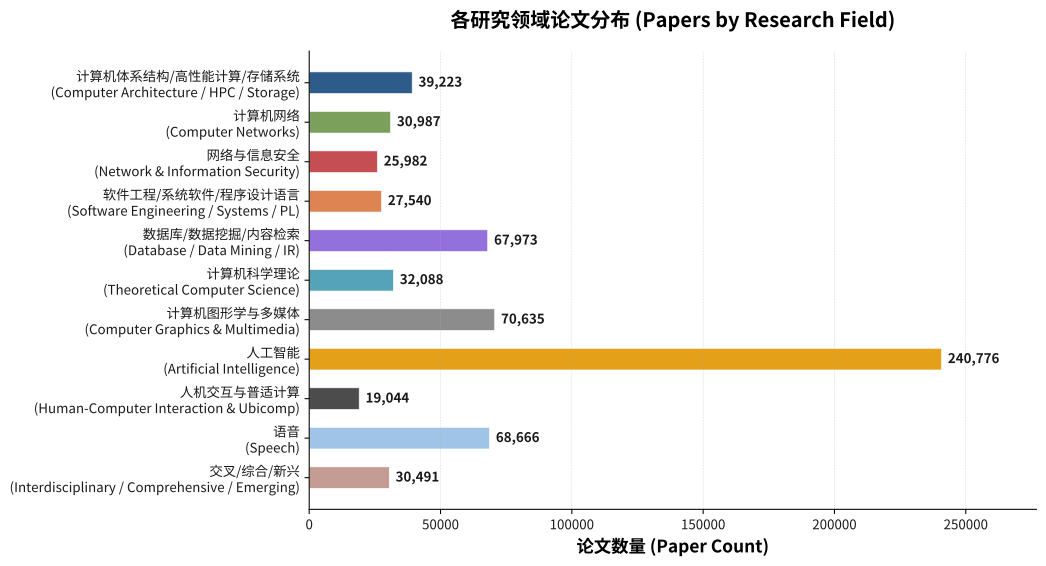
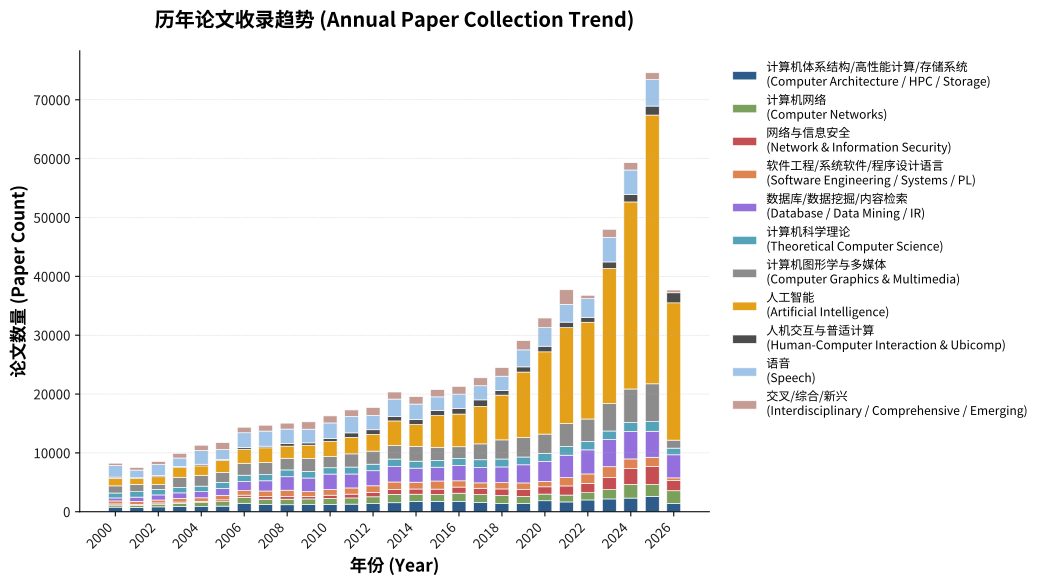
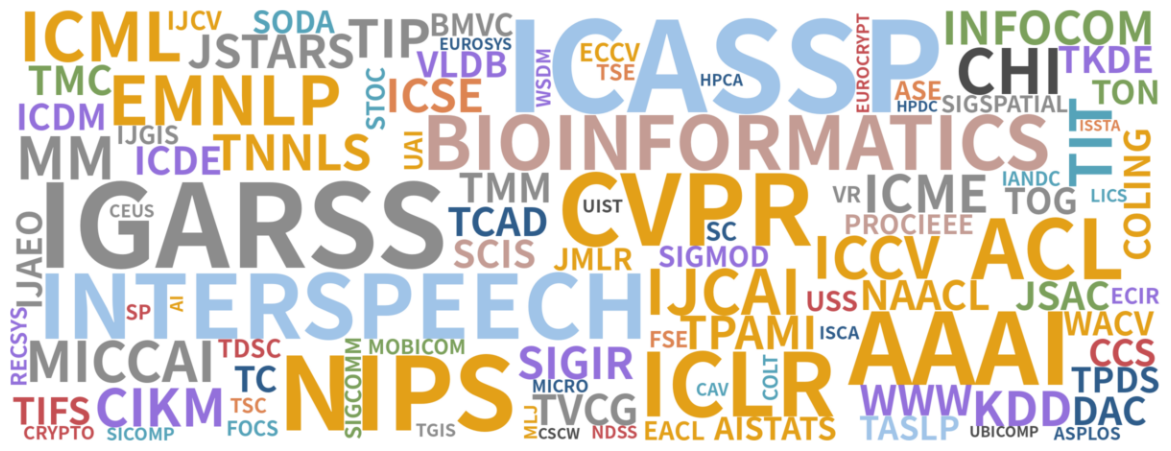
📦 数据集内容 · What's in this dataset
| 路径 Path | 子集 Subset | 格式 Format | 说明 Description |
|---|---|---|---|
cache/cache.jsonl.gz |
papers(默认 / default) |
gzip-compressed JSON Lines (UTF-8) | 每行一篇论文 · One paper per line; one JSON object per line |
cache/abstract_backfill_progress.jsonl.gz |
abstract_backfill_progress |
gzip-compressed JSON Lines (UTF-8) | 摘要回填流水线的进度/断点记录,不是论文元数据;仅供工作流恢复使用 · Append-only progress log of the abstract-backfill pipeline (not paper records); used by the workflow to resume between runs |
Hugging Face 会自动为 cache.jsonl.gz 生成 Parquet 视图,也可直接用 datasets.load_dataset(...) 读取,无需手动解压。Hugging Face also exposes an auto-generated Parquet view, so datasets.load_dataset(...) works out of the box.
💡 Dataset Viewer 与
datasets.load_dataset("youngfish42/PaperVault")默认展示/加载的都是papers子集(即cache/cache.jsonl.gz)。如需查看回填进度,请在 Viewer 顶部下拉框切换到abstract_backfill_progress,或调用load_dataset("youngfish42/PaperVault", name="abstract_backfill_progress")。The Dataset Viewer anddatasets.load_dataset("youngfish42/PaperVault")both default to thepaperssubset (cache/cache.jsonl.gz). To inspect backfill progress, switch the Viewer's subset dropdown toabstract_backfill_progressor callload_dataset("youngfish42/PaperVault", name="abstract_backfill_progress").
📐 字段 Schema
| Field 字段 | Type 类型 | Notes 说明 |
|---|---|---|
paper_name |
string | 论文标题(已归一化)· Normalised paper title |
paper_authors |
list[string] | 作者列表,按原始顺序 · Author names in order |
paper_url |
string | 论文在原始平台的链接(PDF 或落地页)· Canonical URL on the venue's site (PDF or landing page) |
paper_abstract |
string | 摘要;未回填时为空字符串 · Abstract; may be empty when not yet backfilled |
paper_code |
string | 从摘要中抽取出的 GitHub 仓库 URL;"#" 是「未发现代码链接」的占位符 · GitHub repository URL extracted from the abstract; "#" is the sentinel for "no code link discovered" |
conf |
string | 会议+年份标识,如 ACL2024、NIPS2023、CVPR2025;去掉末尾四位数字即可得到会议系列。注意 NeurIPS Proceedings 沿用历史命名 NIPS{year}。Venue + year identifier (e.g. ACL2024, NIPS2023, CVPR2025). Strip the trailing 4-digit year to recover the venue series. Note that NeurIPS Proceedings entries use the historical name NIPS{year}. |
缺失字段请按空字符串处理。Treat missing fields as empty strings.
⬇️ 获取方式 · How to download
下面三种方式任选其一即可,无需克隆 GitHub 仓库。Pick any one of the three options below — no GitHub clone is required.
方式 A · Option A — huggingface_hub(推荐 / recommended)
from huggingface_hub import hf_hub_download
import gzip, json

path = hf_hub_download(
    repo_id="youngfish42/PaperVault",
    filename="cache/cache.jsonl.gz",
    repo_type="dataset",
)

with gzip.open(path, "rt", encoding="utf-8") as f:
    for line in f:
        record = json.loads(line)
        # 在这里处理一条记录 · do something with the record
方式 B · Option B — datasets
from datasets import load_dataset

ds = load_dataset("youngfish42/PaperVault")
print(ds[next(iter(ds))][0])
数据集只有一个默认 split(非 ML 训练集),不要传
split="train"。Single default split — do not passsplit="train".
方式 C · Option C — huggingface-cli / 直接 HTTPS · Plain HTTPS
huggingface-cli download youngfish42/PaperVault \
    cache/cache.jsonl.gz --repo-type dataset --local-dir ./data
💡 文件压缩后约 120 MB(会随数据持续增长),解压后是 GB 级 JSONL 流,请按行流式读取,不要整体载入内存。The file is ~120 MB compressed (and growing) and decompresses to a multi-GB JSONL stream. Stream it line-by-line rather than loading the whole thing into memory.
🔁 更新节奏 · Update cadence
数据集由三个 GitHub Actions 工作流负责重建并推送到本 Hub 仓库 / The dataset is rebuilt and pushed to this Hub repo by three GitHub Actions workflows:
| 工作流 Workflow | 触发节奏 Schedule | 推送的内容 What it pushes |
|---|---|---|
collect_papers |
每月 15 号 16:00 UTC + 手动触发 · 15th of every month at 16:00 UTC + workflow_dispatch |
增量抓取新发现的会议/年份组合 · Incremental crawl of newly-discovered conference/year combinations |
backfill_abstracts |
每月 1 号 00:00 UTC + 手动触发 · 1st of every month at 00:00 UTC + workflow_dispatch |
为已有论文回填 paper_abstract · Adds paper_abstract for papers that were collected without one |
update_readme |
仅手动触发 (workflow_dispatch) · Manual only (workflow_dispatch) |
默认仅刷新 README 与统计;当输入参数 mode=force 时执行全量重建 · Refreshes the README and statistics by default; performs a full rebuild only when invoked with mode=force |
每次推送都使用 Hugging Face 的 parent_commit 乐观锁机制,避免并发覆盖。Each push uses Hugging Face's parent_commit optimistic-lock mechanism to avoid silently overwriting concurrent updates.
🌐 线上服务 · Live Service
无需下载数据集即可直接体验 Web 检索: No need to download the dataset — try the web search directly:
🔗 关联仓库 · Related repository
如果你需要完整的搜索 Web UI(智能搜索 + Web of Science 风格的高级查询 DSL)、REST API(/api/v1/*)、抓取 / 合并 / 摘要回填流水线源码、收录会议范围、统计仪表盘、项目截图或贡献指南,请前往 GitHub 项目仓库。If you are looking for the full search Web UI (smart search + Web-of-Science-style advanced query DSL), the REST API (/api/v1/*), the crawling / merging / abstract-backfill pipelines source code, conference coverage, statistics dashboards, screenshots or contribution guidelines, please visit the GitHub repository.
👉 github.com/youngfish42/PaperVault
📜 许可证 · License
代码以 GPL-3.0 发布;每条论文记录的著作权仍属于原作者 / 出版方,本数据集仅重新分发公开可获取的元数据与链接。Code is released under GPL-3.0; individual paper records remain the IP of their authors/publishers — this dataset only redistributes publicly available bibliographic metadata and links.
- Downloads last month
- 2,267